
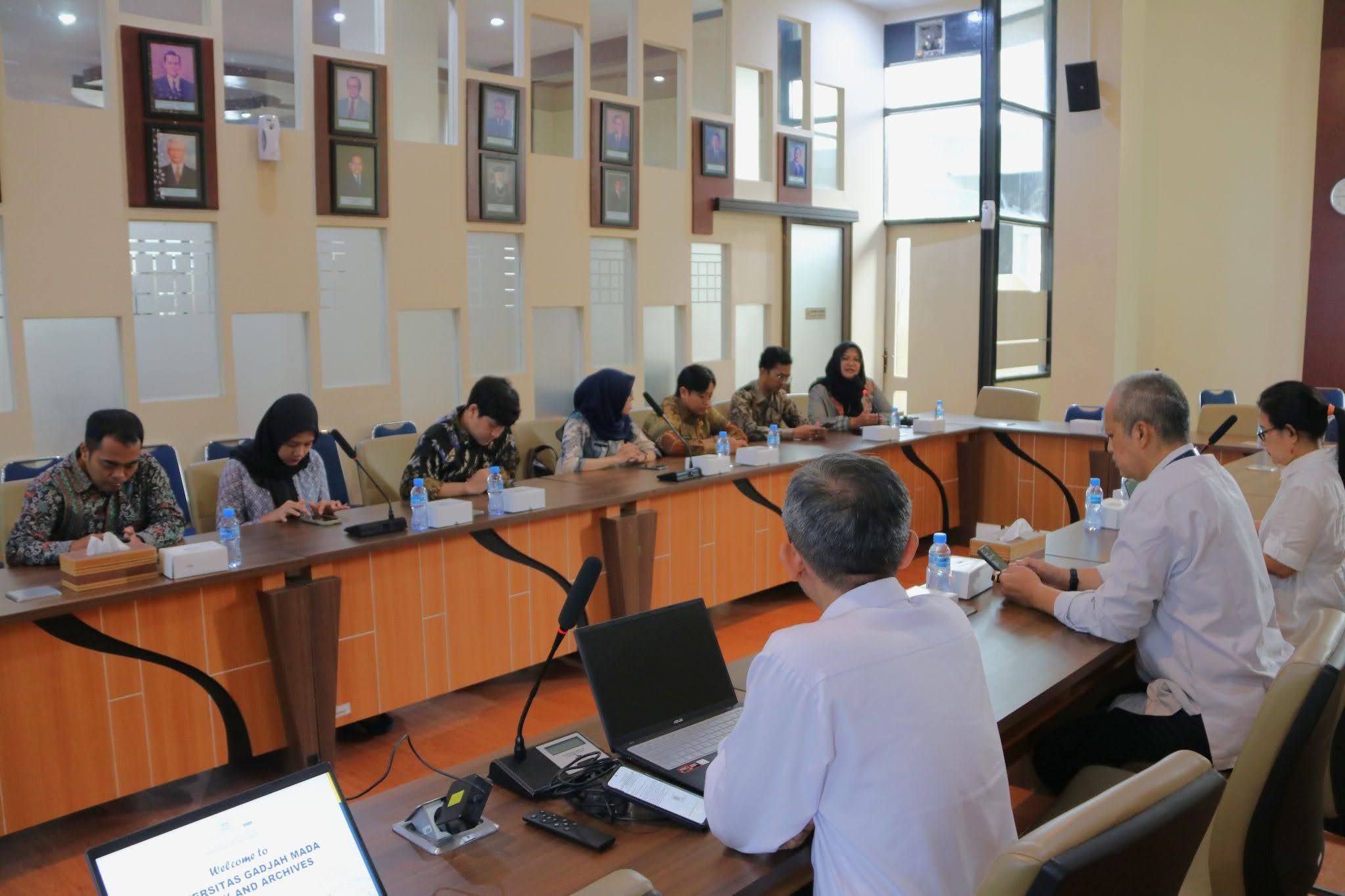
 What makes a digital library truly valuable for its users? This question became one of the key topics discussed during the comparative study visit of the Center for Regional Government Human Resource Development (BBPKA-PDN) III under the Ministry of Home Affairs to the Universitas Gadjah Mada (UGM) Library and Archives on Monday (22/6), held at the UGM Library and Archives Meeting Room.
In today’s digital era, libraries are expected to provide accessible services while responding to the evolving needs of their users. Collection management, system integration, and strategies for promoting library services have become essential aspects of this transformation.
Ristiyan Widiaswati, S.I.P., M.Sc., Head of the Human Resources and General Affairs Subdivision of BBPKA-PDN III, stated that the visit was part of the institution’s efforts to strengthen its capacity in developing digital library services.
“We chose the UGM Library and Archives because of its experience in developing digital services that continuously adapt to users’ needs. We hope to learn from the best practices implemented by UGM,” she said.
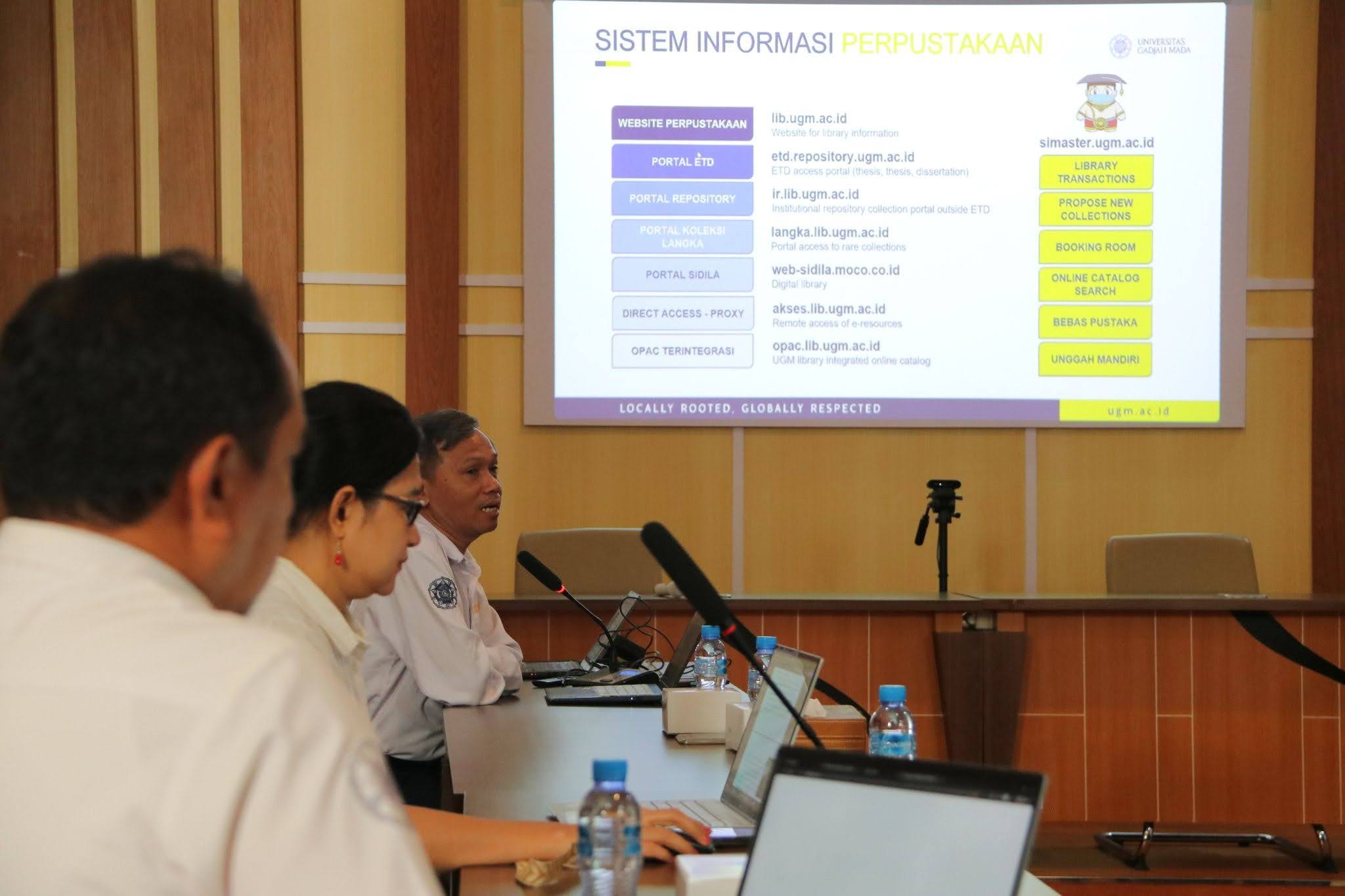 Welcoming the delegation, Arif Surachman, S.I.P., M.B.A., Director of the UGM Library and Archives, introduced participants to UGM’s digital service ecosystem. Various systems, including Sidila Digital Library, Simaster, the Integrated OPAC, and the Electronic Theses and Dissertations (ETD) platform, were presented as part of UGM’s efforts to provide easier access to information for the academic community.
“All of the services we have developed are interconnected. Our goal is to ensure that users can access information more easily, quickly, and conveniently,” Arif explained.
The discussion continued with Wahyu Supriyanto, S.E., M.Si., Head of Library Services at the UGM Library and Archives, who emphasized the importance of promoting library services.
“Library collections can be utilized more widely when they are properly promoted. Therefore, service promotion plays an important role in increasing the use of collections and bringing libraries closer to their users,” Wahyu said.
The discussion session was engaging, with participants actively raising questions about digital collection management, system integration, and strategies to increase library service utilization.
In the closing session, Safirotu Khoir, Ph.D., Coordinator for Public Relations and International Affairs, encouraged participants to view digital libraries from a broader perspective.
“Many people still associate digital libraries primarily with e-book services. In fact, their scope is much broader. Digital libraries bring together various digital information resources, including scholarly works and research data that can be accessed through an integrated system,” Safirotu explained.
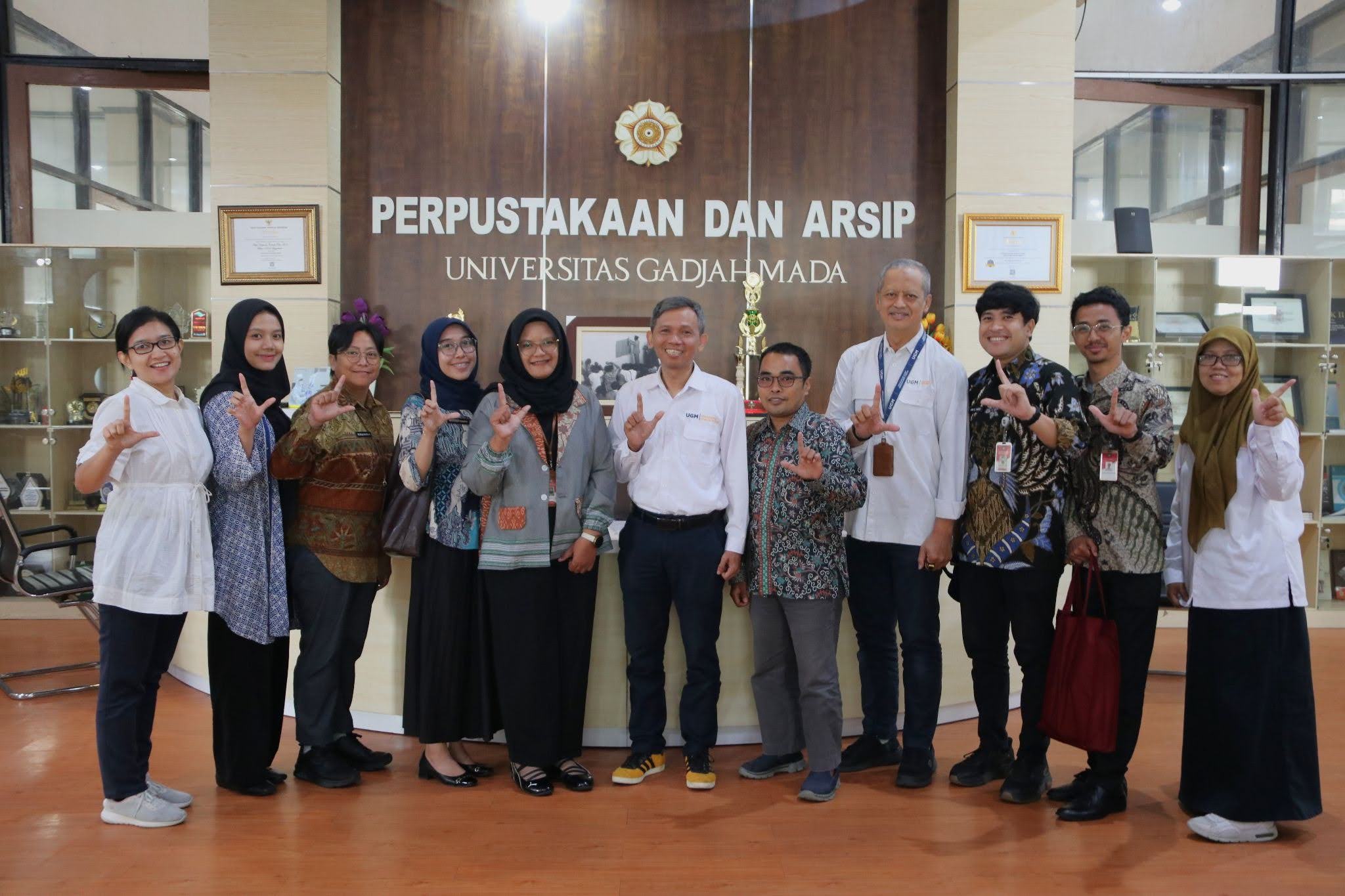
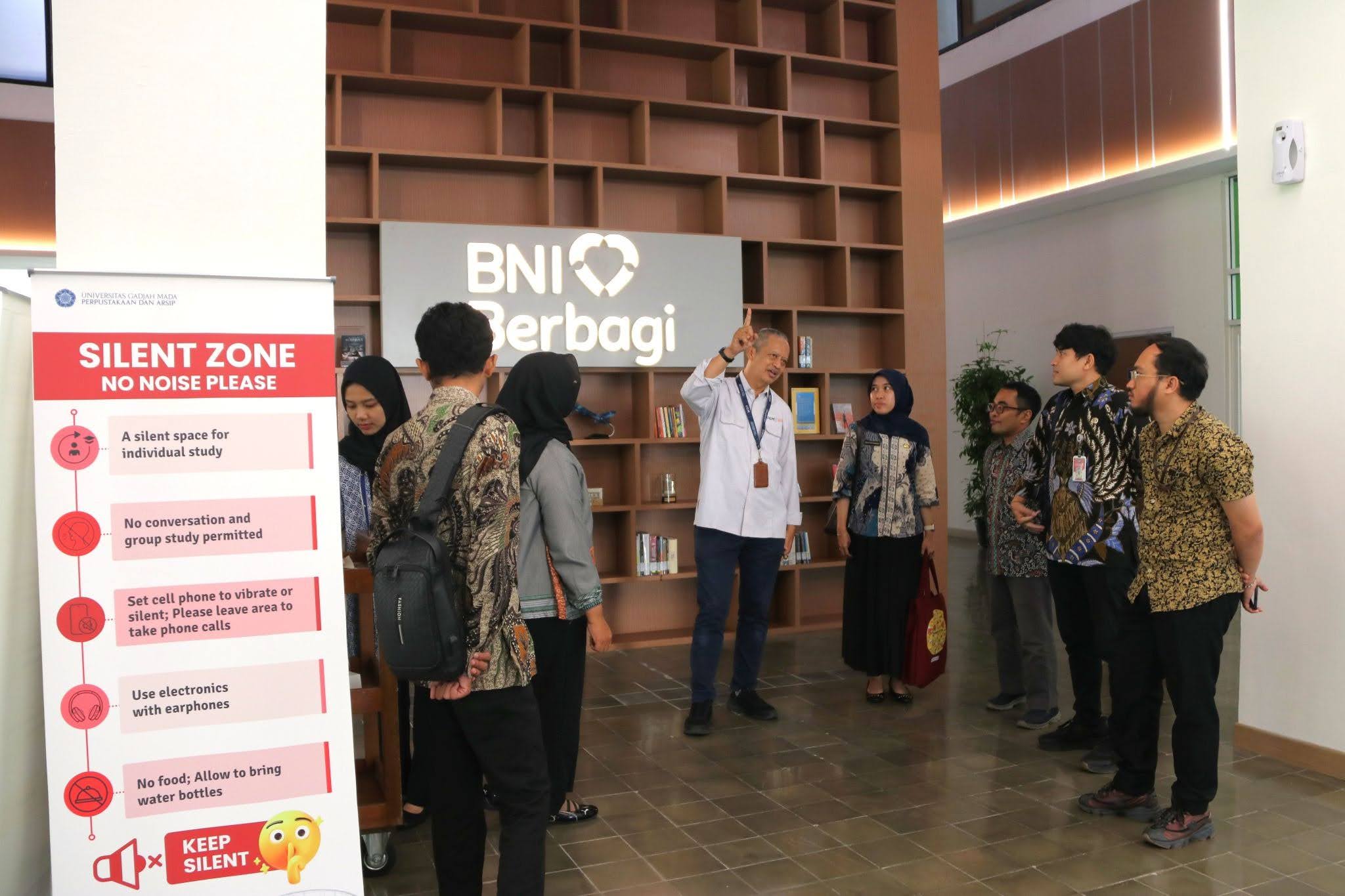 Through this comparative study, the UGM Library and Archives once again provided a platform for sharing experiences with other institutions. Such collaborations are expected to inspire innovation and strengthen libraries’ role in meeting information needs amid rapid technological developments.
This activity also supports the achievement of the Sustainable Development Goals (SDGs), particularly SDG 4: Quality Education, through strengthening the capacity of library professionals and expanding access to digital learning resources. In addition, the initiative aligns with SDG 17: Partnerships for the Goals by fostering interinstitutional collaboration in knowledge sharing and the sustainable development of information services.
Contributor: Wasilatul Baroroh