
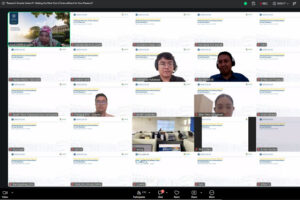
 Amid the abundance of scholarly information available today, finding the right references requires more than simply entering keywords. The ability to effectively search, select, and utilize scholarly resources is an essential part of producing high-quality research. Recognizing this need, the UGM Library and Archives held the Research Smarter Series #1: Getting the Most Out of ScienceDirect for Your Research workshop on Tuesday (August 11).
Held in collaboration with Elsevier, the online workshop introduced the UGM academic community to ScienceDirect as a scholarly information platform that can be utilized to support research needs.
Head of the Data and Information Systems Division at the UGM Library and Archives, Yulistiarini Kumaraningrum, S.P., M.M., said that the workshop was part of the Research Smarter Series, organized by the UGM Library and Archives to introduce various tools that can support the academic community in conducting research.
“This workshop is part of a series of workshops organized by the UGM Library and Archives. We discuss various tools that can be utilized to support research. This time, the focus is on ScienceDirect, from maximizing its use and conducting more effective literature searches to utilizing it to support research and academic writing,” said Yulistiarini.
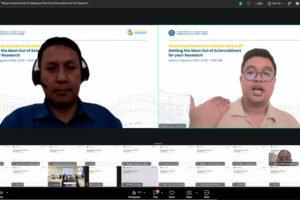 She emphasized that strengthening the academic community’s understanding of various research resources and supporting tools is essential to ensuring that available access can be utilized to its fullest potential. Therefore, the workshop not only introduced the platform but also provided practical guidance on how to use it effectively.
The workshop also highlighted UGM’s position as a ScienceDirect user. Yulistiarini noted that UGM is among the institutions subscribing to the ScienceDirect service.
This statement was confirmed by Pradipta Faikar Hakim, Customer Success Manager at Elsevier South East Asia–Indonesia, who served as the workshop’s speaker. According to the data he presented, UGM is recorded as the highest user of the ScienceDirect service.
“Based on the data we have, UGM is the largest user of the ScienceDirect service,” said Pradipta.
The data reflects the high demand among the UGM academic community for access to scholarly literature to support academic activities and research. However, access to resources needs to be accompanied by the ability to make optimal use of the available features and facilities.
During the main session, moderated by UGM Librarian Barid Budi Wicaksono, Pradipta introduced ScienceDirect and the various tools available on the platform. Participants were guided through their functions and applications, including how to conduct information searches and identify literature relevant to their research needs.
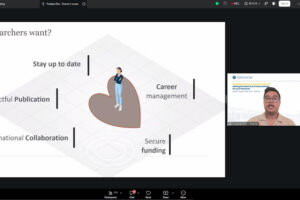 The session also focused on strategies for conducting more effective literature searches. By understanding the platform’s features and how they work, users are expected to conduct more targeted searches and make better use of available scholarly resources to strengthen their research and academic writing.
Through the Research Smarter Series, the UGM Library and Archives continues to strengthen the capacity of the academic community to utilize information resources and technologies in support of research. This initiative aligns with the Sustainable Development Goals (SDGs), particularly SDG 4: Quality Education, through strengthening access to and capacity for learning; SDG 9: Industry, Innovation, and Infrastructure, particularly through the utilization of information infrastructure and technology to support research and innovation; and SDG 17: Partnerships for the Goals, through collaboration between the UGM Library and Archives and Elsevier to expand access to knowledge and strengthen the academic community’s capacity to utilize scholarly information resources.
Access to scholarly resources is not an end in itself. The next challenge is ensuring that every available resource can be utilized to its fullest potential. The more effectively researchers search for and utilize information, the greater the opportunity to produce research that is rigorous, relevant, and impactful.
Contributor: Wasilatul Baroroh