
Writing an academic paper does not stop at finding the right references. Once the literature has been collected, researchers still need to ensure that authors’ names, publication years, DOIs, citations, and bibliographies are recorded correctly. What may seem like a simple task can be quite time-consuming, especially when a manuscript needs to be revised or adapted to a different citation style.
This issue was among the topics discussed at the Academic Writing Literacy Workshop titled “Reference Manager Integration with the ScienceDirect Database,” organized by the UGM Library and Archives at the Computer Laboratory, L1 Building, 5th Floor, UGM Library and Archives, on Thursday, October 1, 2026.
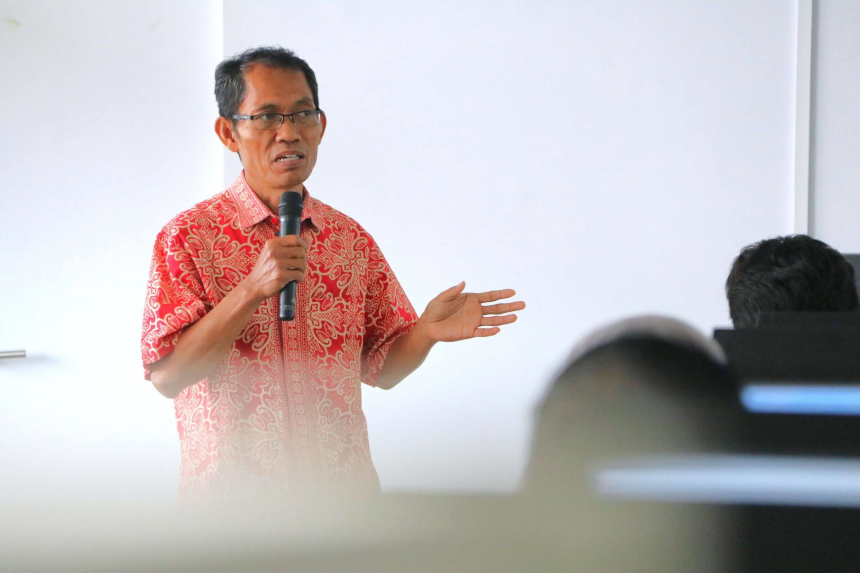 During the workshop, participants were introduced to reference managers such as Zotero and Mendeley to help organize the literature and simplify the citation process. These applications can be used to import sources from databases or websites, store bibliographic information, manage citations, and generate bibliographies according to the selected citation style.
The activity also supports strengthening the Sustainable Development Goals (SDGs), particularly SDG 4: Quality Education, by developing information literacy and academic skills within the academic community. The use of reference managers and scholarly databases also aligns with SDG 9: Industry, Innovation and Infrastructure, particularly by promoting digital technology and information infrastructure to support research.
The benefits of reference managers extend beyond automatically generating bibliographies. These tools also help prevent inconsistencies between citations and bibliographies, make it easier to change citation styles when adapting manuscripts to journal requirements, and help researchers organize and retrieve literature they have used. As a result, time that would normally be spent on administrative tasks can instead be devoted to developing the substance of the paper.
This becomes increasingly important because errors in reference management can occur quite easily. An article that has been cited may be accidentally omitted from the bibliography. Conversely, a reference may appear in the bibliography even though it was never cited. Errors in authors’ names, publication years, DOIs, and reference order may also occur when the entire process is handled manually.
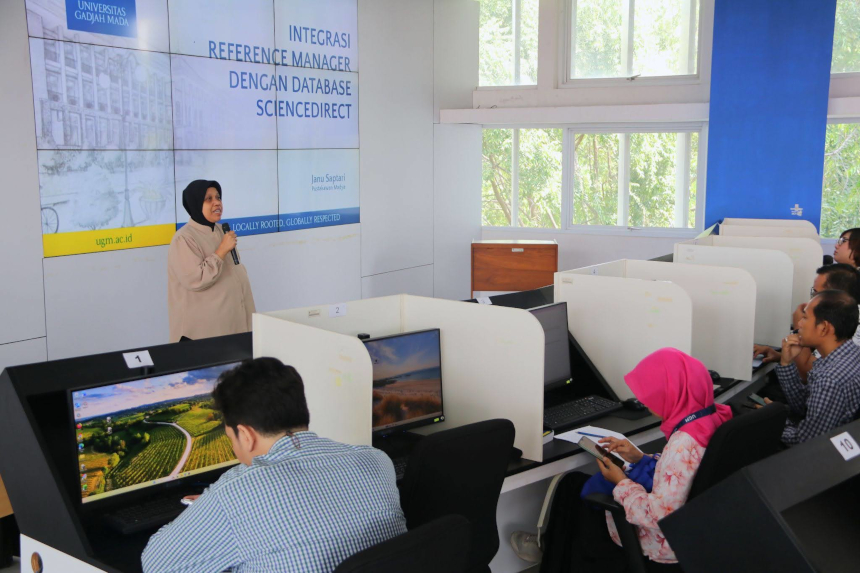 The workshop featured Janu Saptari, SIP., Senior Librarian at UGM, who shared insights into the functions of reference managers and guided participants through hands on practice. Participants learned various ways to add reference data, including manual entry, importing data in RIS format, adding PDF files, using DOI or PMID, and using a web importer.
Janu also emphasized that automation does not mean that every process can be completed without verification. Metadata obtained from a source may be incomplete and therefore still needs to be checked and edited before use.
“Researchers often spend a considerable amount of time dealing with technical matters such as formatting and citation styles. By integrating reference management software directly with
databases such as ScienceDirect, researchers can save significant time and focus more fully on the substance of their writing,” said Janu Saptari during the session.
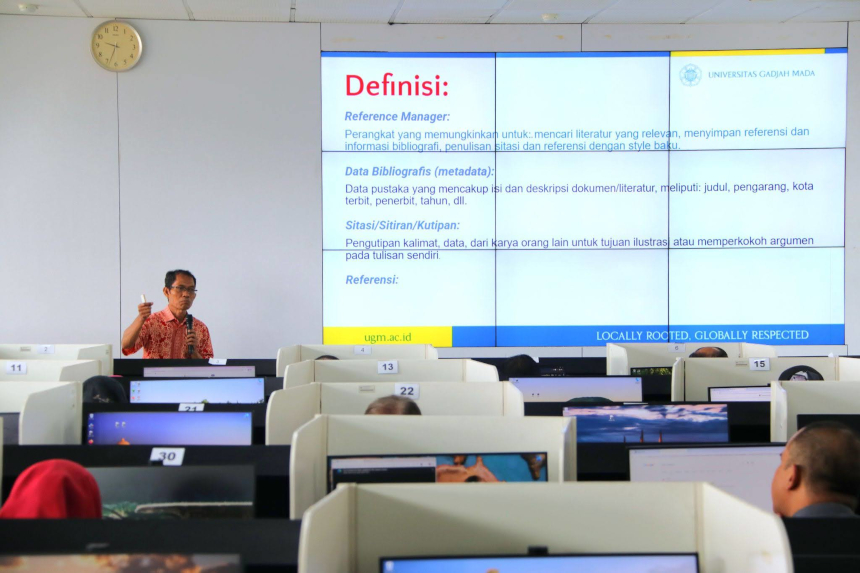 During the practical session, participants explored how Zotero and Mendeley can be used with ScienceDirect through browser add ons. With Zotero, metadata from ScienceDirect can be exported in formats such as RIS and BibTeX. Mendeley, meanwhile, allows users to export metadata directly, use standard metadata formats, and leverage its integration with the Elsevier ecosystem and ScienceDirect.
This integration simplifies the reference management process. When users find a relevant article on ScienceDirect, they do not need to manually enter all of the bibliographic information again. The reference can be added to a reference manager and then organized and reused during the writing process.
Head of the Data and Information Systems Division at UGM Library and Archives, Yulistiarini Kumaraningrum, S.P., M.M., emphasized the importance of making effective use of the scholarly databases subscribed to by the university.
“UGM subscribes to many reputable databases, including ScienceDirect, to support the research needs of the academic community. However, it is important to understand that the sustainability of these database subscriptions is regularly evaluated based on usage rates. Through this training, we hope that students and researchers can make optimal use of digital references to improve both the quality and quantity of UGM’s scholarly publications,” said Yulistiarini.
The workshop is part of the UGM Library and Archives’ efforts to strengthen the academic community’s skills in using digital information resources for academic and research activities. Mastering writing support technologies such as reference managers can help researchers work more efficiently while making the reference management process more organized.
Contributor: Wasilatul Baroroh