
What makes an academic article engaging to read and academically strong? The answer goes beyond the number of references or the amount of data it contains. A clear flow needs to work from beginning to end, guiding readers through the problem, the research process, and ultimately the meaning of the findings.
This was the issue explored by UGM Library and Archives through the Academic Writing Literacy Workshop Series, titled “Dissecting the Structure of a Scholarly Publication Article,” held on Tuesday, September 15, 2026, in a hybrid format.
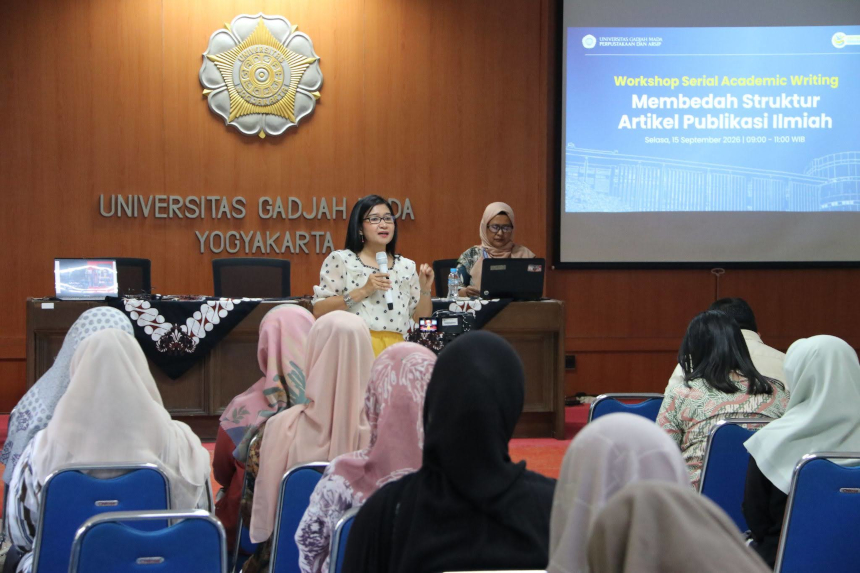 The workshop was part of UGM Library and Archives’ efforts to support the academic journey of the UGM academic community. A range of academic literacy workshops are organized to help members of the academic community develop the skills they need throughout their learning, research, and scholarly publishing journey.
In her remarks, Yulistiarini Kumaraningrum, S.P., M.M., Head of the Data and Information Systems Division at UGM Library and Archives, explained that the workshop series is part of the library’s support for the academic needs of the UGM academic community.
“This is one of UGM Library and Archives’ programs to support the academic journey of the UGM academic community. We organize a range of workshops that can be attended to support their academic and research needs,” said Yulistiarini.
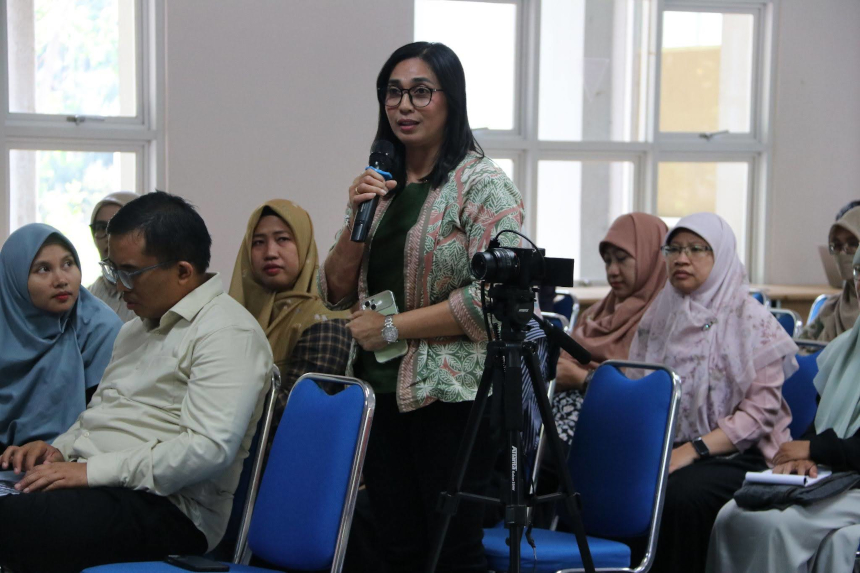
The discussion then moved to a more specific issue during the workshop session. Speaking to hundreds of participants, Safirotu Khoir, Ph.D., Coordinator of Public Relations and International Affairs at UGM Library and Archives and a lecturer at the UGM Graduate School, invited participants to examine academic articles not simply by looking at what is written, but by understanding how each section works and connects with the others.
To explain this, Safirotu used a familiar analogy: a chef.
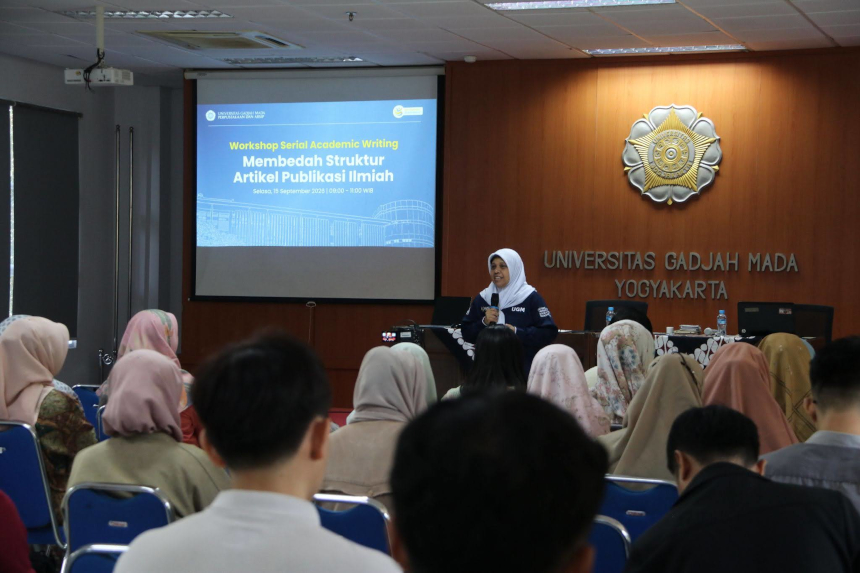 “An author is like a chef who creates a delicious dish.”
In this analogy, references and data are the ingredients that need to be carefully selected. However, good ingredients do not automatically produce a good dish. Authors still need to combine and process them through a sound logical flow. This is also where innovation, or novelty, plays an important role in distinguishing a study from previous research.
From this “kitchen,” participants were then invited to see that an academic article has its own storyline. Five questions can be used to assess whether the flow of a paper is on the right track: WHY, WHAT, HOW, FIND, and SO WHAT.
WHY asks why the research matters. WHAT identifies what is not yet known. HOW explains how the answer is sought. FIND presents what was discovered. Meanwhile, SO WHAT challenges the author to answer one of the most important questions after the findings have been established: What do those findings mean?
These five questions are then connected to the anatomy of an academic article. The title tells readers what is being discussed, the abstract summarizes the core of the paper, the introduction establishes why the research is needed, and the methods explain how the research question is addressed.
 The journey then continues through the results and discussion. The two are often treated as similar, even though they serve different purposes. The results focus on what was found, while the discussion explains what those findings mean and how they relate to previous research. At the end, the conclusion brings readers back to the main message of the study. Meanwhile, the references provide a trail showing the sources of knowledge used by the author.
“References are the contents of an author’s mind,” said Safirotu.
The statement highlights the important role of references in building a scholarly paper. The depth of the references reflects how well an author understands the field, develops an argument, and positions their research within existing scholarship.
Through the workshop, UGM Library and Archives encouraged the academic community to view scholarly writing as part of an academic journey that requires continuous skill development and learning. Understanding the structure of an academic article can also help authors become more critical readers while making their own writing more focused and systematic.
This effort aligns with the Sustainable Development Goals (SDGs), particularly SDG 4: Quality Education, through the development of skills that support learning and higher education. Strengthening research and scholarly writing skills also relates to SDG 9: Industry, Innovation and Infrastructure, particularly in promoting innovation and research-based knowledge development.
Ultimately, dissecting the structure of an academic article means learning to see the thinking behind the writing. From why the research needs to be conducted, to what remains unknown, how the answers are sought, and why the findings matter, every element needs to connect. A strong paper is not only about what it discovers, but also about how clearly the author helps readers understand why those findings deserve attention.
Contributor: Wasilatul Baroroh