
One by one, titles were added to the proposal list. Some covered religion, law, health, and business. The number continued to grow until it reached 296 titles. This was more than an ordinary reading list. Behind it was a picture of the reading materials sought by the UGM academic community.
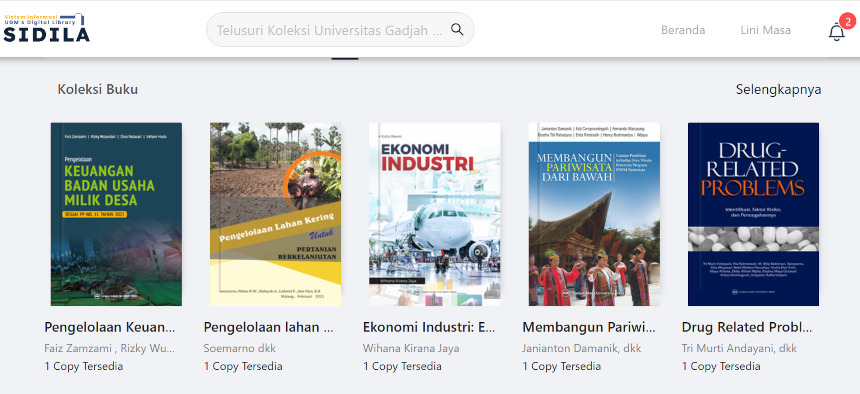 For SIDILA’s collection development in 2026, 296 digital book titles, comprising 326 copies, were proposed by 22 faculties and units across UGM. The number reflects the growing demand for digital reading materials on campus. The proposed titles also span a wide range of fields, following the learning and research needs of different faculties.
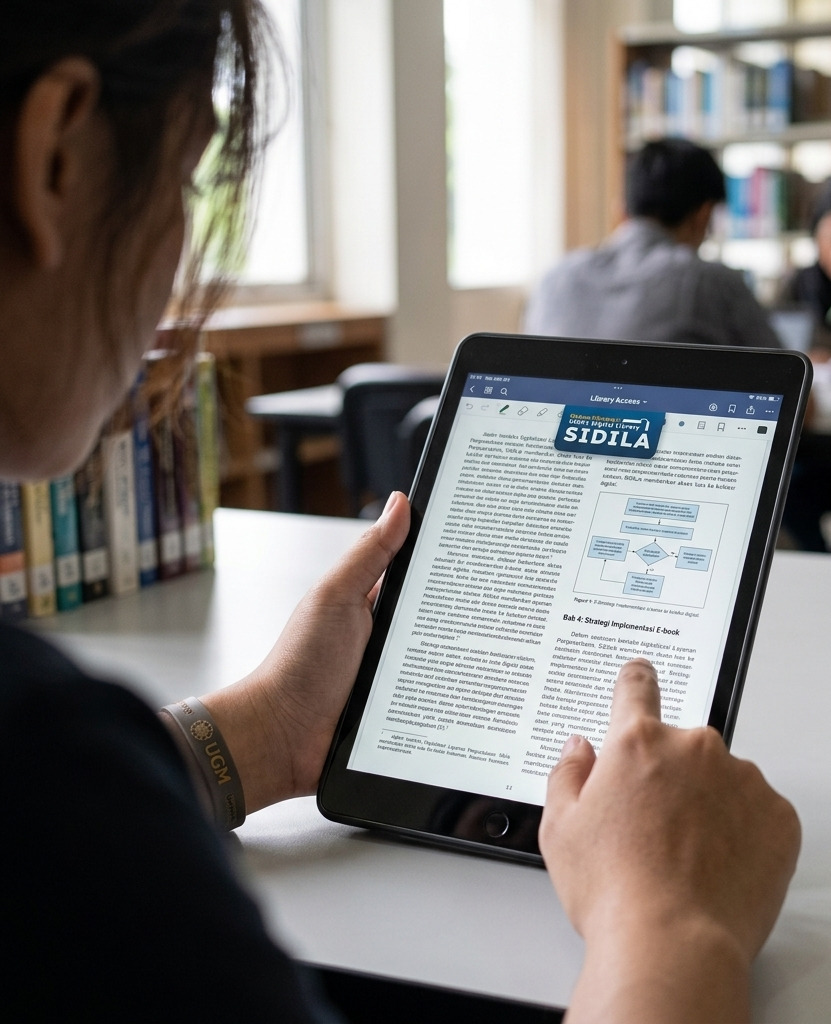
SIDILA, or the UGM’s Digital Library Information System, provides a space to meet these needs. As UGM’s digital library, SIDILA allows members of the academic community to access digital books anytime and anywhere. The service is equipped with social features and an online borrowing system.
Since the SIDILA partnership began in 2025, its collection has grown to 528 titles with 577 copies. During the 2025–2026 evaluation period, 1,314 users recorded a total of 936 borrowing transactions. These figures indicate that accessing reading materials through digital platforms is gradually becoming part of the academic community’s reading habits.
Students are the largest user group of the service. Of the 112 respondents to the Information Needs Survey (SKI), 105 or 93.75 percent were students. SIDILA is primarily used to support academic activities and research.
Users also gave positive feedback when asked about the benefits of the collection. A total of 70 respondents, or 62.50 percent, considered the SIDILA collection very useful, while 30 respondents, or 26.79 percent, considered it useful.
However, users’ needs extend beyond the collection currently available. A total of 49 respondents, or 43.75 percent, said they were very satisfied with the availability of the collection, while 39 respondents, or 34.82 percent, said they were satisfied. The remaining 21.43 percent rated the availability and relevance of the collection as fair to less satisfactory. These findings provide one of the bases for reviewing the direction of future collection development.
 The collection development team, coordinated by Aprilia Mardiastuti, SIP., MA., mapped users’ needs through the Information Needs Survey, SIDILA usage statistics, and direct proposals from library users. The process revealed the subject areas most in demand.
The Religion, Islam, and Spirituality category recorded the highest number of proposals, with 71 titles or 23.99 percent. This was followed by Law, Social and Political Sciences, and Public Administration, as well as Medicine, Health, Nursing, and Medical Sciences, with 32 titles each or 10.81 percent. Economics, Finance, Management, Business, and Entrepreneurship also stood out, with 27 titles or 9.12 percent.
This data-driven approach to collection development helps strengthen access to learning and research resources. It also supports Sustainable Development Goal (SDG) 4: Quality Education, particularly by expanding access to learning materials and knowledge resources.
At the same time, SIDILA’s development demonstrates how technology can be used to expand access to information. Beginning in July 2026, the platform introduced an audiobook feature. Collections from various publishers, including UGM Press, are also available to support the dissemination of UGM’s academic works. This initiative aligns with SDG 9: Industry, Innovation and Infrastructure, particularly through the strengthening of digital infrastructure and the use of technological innovation to support knowledge services.
The Information Needs Survey provides important input for updating collection development policies. The hundreds of titles proposed this year offer a picture of changing information needs across the university. As learning and research activities become increasingly connected to technology, demand for access to digital reading materials continues to grow. The 296 proposed titles are one reflection of this shift. The list provides a basis for continuously aligning the collection with the needs of the UGM academic community while expanding access to knowledge through digital technology.
Contributor: Wasilatul Baroroh