
The Ministry of National Development Planning/National Development Planning Agency (PPN/Bappenas) visited Universitas Gadjah Mada (UGM) on Thursday, 12 November, to explore its library collections and archival holdings as historical sources for the preparation of a book entitled Bappenas 1945–1966: From the War of Independence to the Supersemar. The research visit to UGM Library and Archives aimed to identify primary and secondary sources documenting the development of Indonesia’s national development planning institutions during the 1947–1969 period.
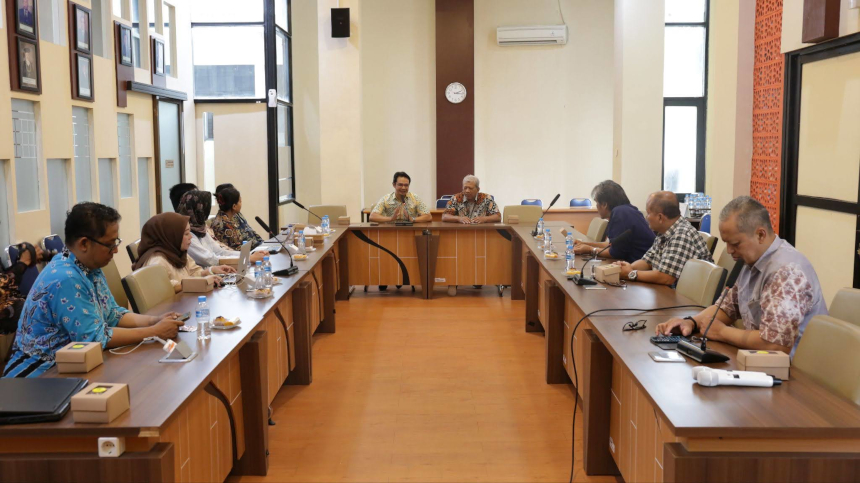 The Bappenas delegation was welcomed by Wahyu Supriyanto, S.E., M.Si., Head of the Library Division at UGM Library and Archives, accompanied by Dr. Herman Setyawan, UGM Archivist, and Sarwono, S.IP., M.A., UGM Librarian. The meeting took place in the Meeting Room on the second floor of Building L7. Following the reception, the delegation proceeded to explore archival holdings in the Archives Service Room and rare collections at Lawang Sajarah.
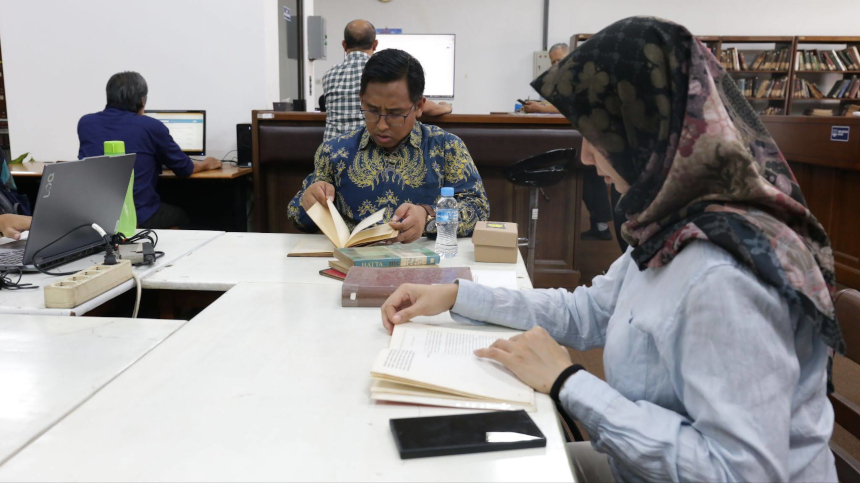 At Lawang Sajarah, the Bappenas team examined several works related to Mohammad Hatta’s ideas and contributions, including Demokrasi Kita (1967), Ekonomi Terpimpin (1960), and Ekonomi Berentjana (1971). These works document Hatta’s thoughts on democracy and Indonesia’s economic system, offering valuable perspectives for understanding the historical context of national development.
The research continued in the Archives Service Room, where the delegation accessed UGM’s archival holdings documenting the institutional development of Indonesia’s national planning system. These included records of the Badan Perantjang Ekonomi (19 January 1947), the Panitia Pemikir Siasat Ekonomi (12 April 1947), and the establishment of the Dewan Perentjana Nasional (Depernas) on 23 October 1958. Documents relating to the establishment of the National Development Planning Agency (Bappenas) on 24 December 1960 were also among the sources examined.
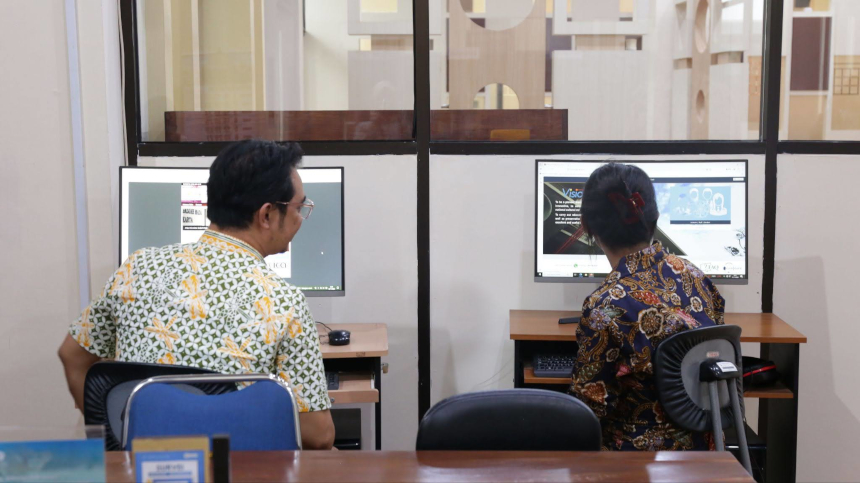 Through access to these historical sources, UGM Library and Archives supported the research by providing access to its collections and assistance from library and archival staff. Primary sources play a crucial role in historical reconstruction, enabling researchers to trace past events and policy developments through authentic and verifiable documentary evidence.
The visit forms part of Bappenas’s efforts to strengthen knowledge management through the preparation of a book on the history of Indonesia’s national development planning institutions. In its formal request to UGM Library and Archives, Bappenas stated that the field research was intended to “explore historical information on the development of planning institutions” during the 1947–1969 period.
The involvement of UGM Library and Archives in this initiative highlights the role of libraries and archival institutions in preserving knowledge and facilitating access to historical information. Collections and archives serve a purpose far beyond storage. When explored, studied, and utilized, they bring past events back into focus as valuable knowledge for present and future generations.
This initiative aligns with Sustainable Development Goals (SDGs) 11: Sustainable Cities and Communities, through the preservation of collections and archives as cultural heritage; SDG 16: Peace, Justice and Strong Institutions, through facilitating access to information; and SDG 17: Partnerships for the Goals, through inter-institutional collaboration in utilizing knowledge resources. This collaboration demonstrates that historical collections and archives do more than document the past; they also serve as learning resources for understanding the nation’s journey and informing future development.
Contributor: Wasilatul Baroroh