
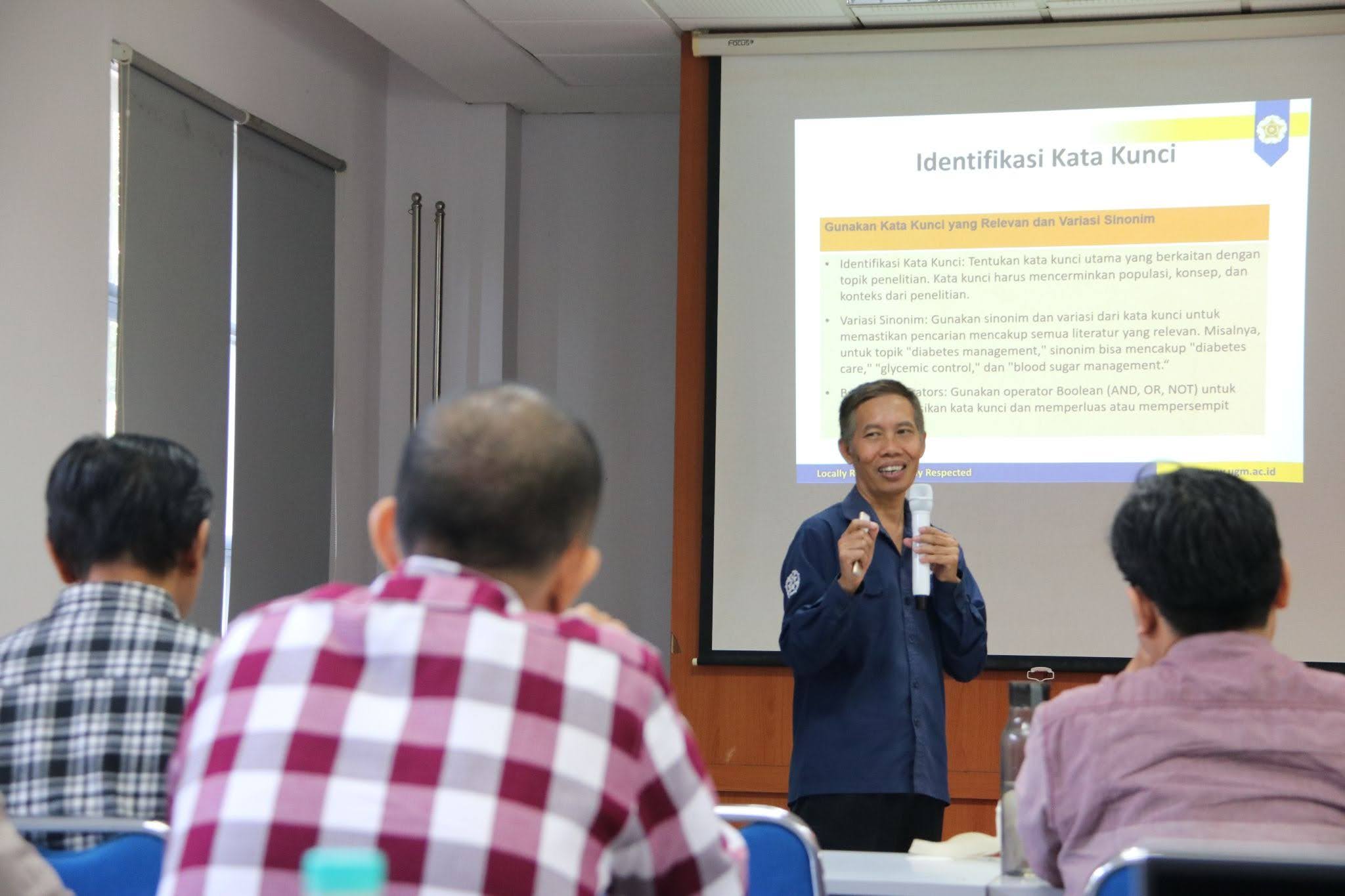
 Identifying an appropriate research gap is often a challenge for researchers, particularly during the early stages of a research project. To address this need, the Universitas Gadjah Mada (UGM) Library and Archives once again organized the Literature Review Series Workshop: Scoping Review Search on Wednesday (June 10) at the Seminar Room, 2nd Floor, L1 Building, UGM Library and Archives.
The two-hour workshop featured Sukirno, S.IP., M.A., Librarian at the Faculty of Medicine, Public Health, and Nursing (FK-KMK) UGM, as the speaker, while Aprilia Mardiastuti, S.IP., M.A., Librarian at UGM, served as the moderator.
Through this workshop, participants gained insights into best practices and the key stages of conducting a scoping review, from formulating research questions to reporting findings. This approach is widely used to map research topics and identify areas that still offer opportunities for further investigation.
In her opening remarks, Yulistiarini Kumaraningrum, S.P., M.M., Head of the Data and Information Systems Division at UGM Library and Archives, emphasized that the workshop was part of a broader literature review series organized by the institution.
“This workshop is part of our literature review series designed to strengthen the academic capacity of the UGM academic community. We hope participants will benefit from each session in the series so that their research processes can be conducted in a more focused and systematic manner,” she said.
During the presentation session, Sukirno explained that scoping reviews are an important approach for researchers seeking to gain a broader understanding of the research landscape before determining a more specific research direction. Through this method, researchers can identify topics that have been extensively studied as well as areas that require further exploration.
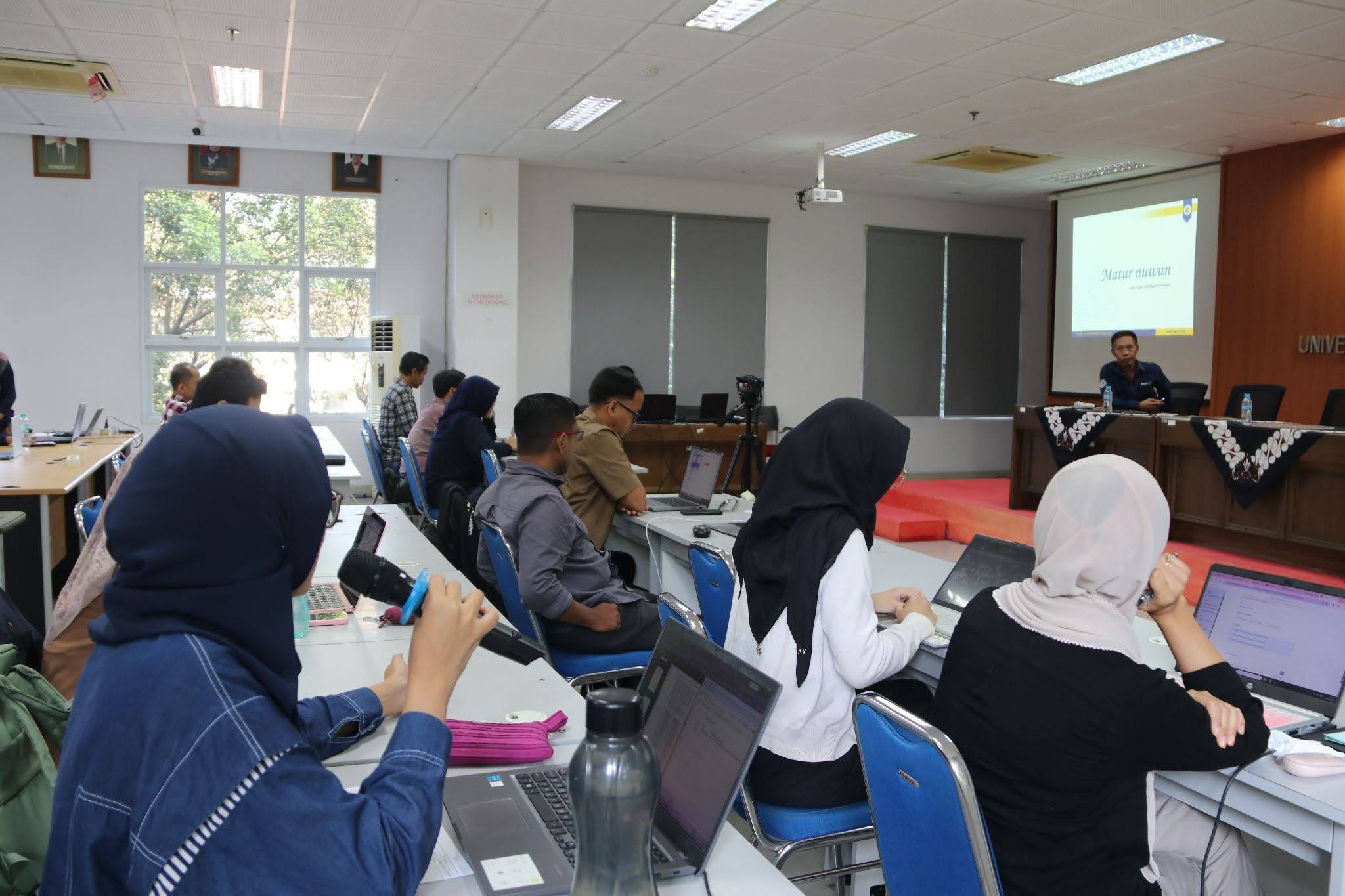 Participants were introduced to the main stages of a scoping review, including identifying research questions, developing a protocol, designing literature search strategies, selecting studies, extracting data, mapping and synthesizing findings, and reporting results.
When discussing research question development, Sukirno highlighted the importance of using the PCC (Population, Concept, Context) framework, which is considered more suitable for scoping reviews than the PICO framework commonly used in evaluative research.
“The PCC framework allows researchers to explore a topic more broadly, making it particularly suitable for scoping reviews aimed at mapping existing literature and identifying research gaps,” he explained.
The workshop also covered article selection processes using inclusion and exclusion criteria, the use of software tools such as Mendeley, EndNote, Covidence, and Rayyan, as well as the development of PRISMA flow diagrams, an essential component in reporting both scoping reviews and systematic literature reviews.
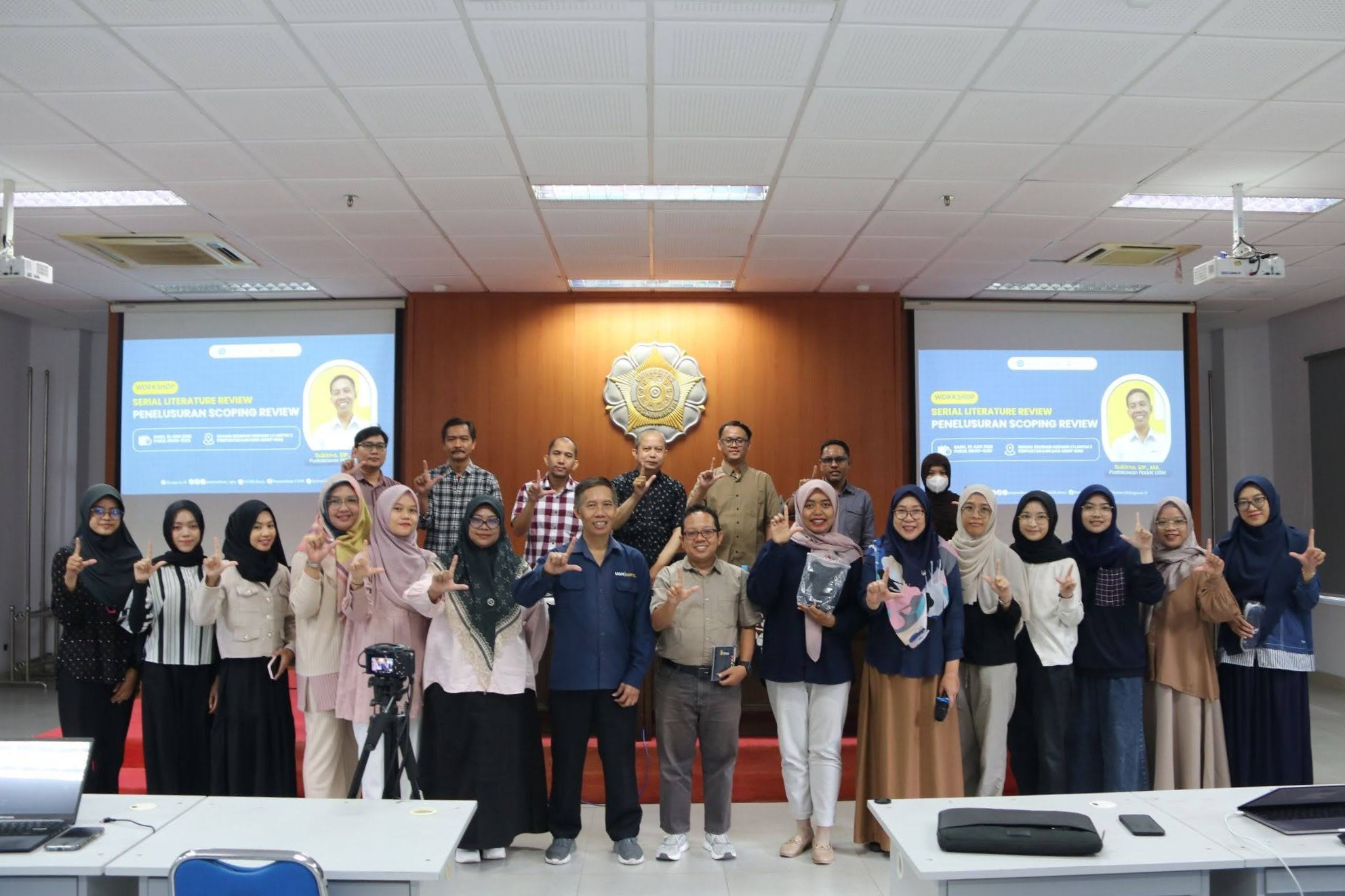 Through initiatives such as this, UGM Library and Archives continues to strengthen its role as an academic partner that supports research quality improvement and information literacy within higher education. This effort aligns with the Sustainable Development Goals (SDGs), particularly SDG 4: Quality Education through strengthening research capacity and lifelong learning, and SDG 9: Industry, Innovation and Infrastructure through the development of a knowledge ecosystem that supports research-based innovation.
As expectations for high-quality scholarly publications continue to grow, understanding scoping review methodology has become an essential skill for researchers. It enables them to identify research gaps more effectively while ensuring that their studies make meaningful contributions to the advancement of knowledge.
Contributor: Wasilatul Baroroh