
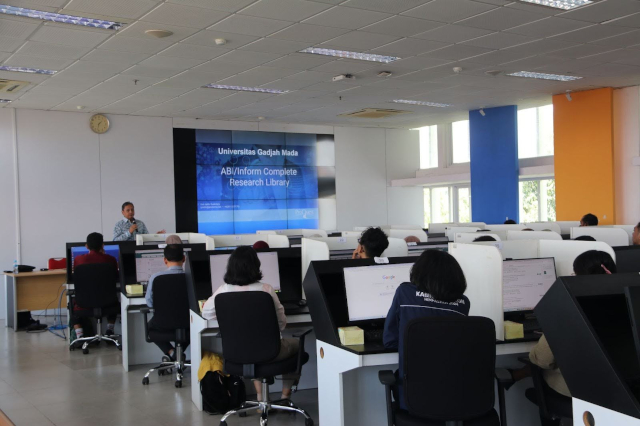
 Access to reputable scholarly sources is key to producing high-quality research. Responding to this need, the Universitas Gadjah Mada (UGM) Library and Archives organized the ProQuest E-Journal Workshop as a Source for Research and Scholarly Writing to strengthen the academic community’s capacity to optimally utilize global academic databases.
The workshop was held on Tuesday (February 3, 2026), from 1:00–3:00 p.m. WIB, at the Computer Laboratory, L1 Building, 5th Floor, UGM Library and Archives. The session featured Dwi Janto Suandaru, Marketing Manager of PT Jasaraya Tama Jaya Buana, as the main speaker, and was moderated by Dewi Nurhastuti, S.Sos., who guided the discussion and question-and-answer session.
The workshop was aimed at students and researchers currently engaged in research projects or academic writing. Through hands-on practice sessions, participants were introduced to effective search strategies, advanced feature use, and reference management using ProQuest collections, including international journals, dissertations, and multidisciplinary scholarly publications.
Head of the Data and Information Systems Division of the UGM Library and Archives, Yulistiarini Kumaraningrum, S.P., M.M., emphasized that the workshop reflects the institution’s commitment to improving research quality through information literacy. “In addition to providing access to information, the library also ensures that users are able to utilize scholarly resources accurately and responsibly,” she said. “Mastery of databases such as ProQuest has a direct impact on research quality and academic integrity.”
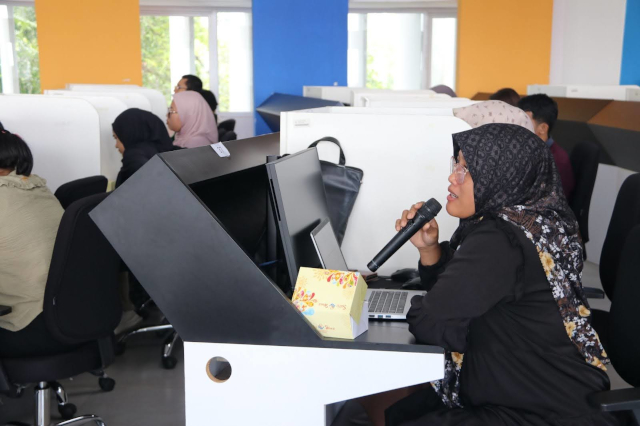 In line with this, Dwi Janto Suandaru highlighted the importance of understanding ProQuest’s features for researchers. “Many users have yet to fully optimize advanced search, filtering, and citation tools. In fact, these features are extremely helpful in accelerating the research process and improving the accuracy of references,” he explained.
The workshop aligns with the Sustainable Development Goals (SDGs), particularly SDG 4 (Quality Education) through strengthened access to and competencies in information literacy, SDG 9 (Industry, Innovation, and Infrastructure) through the utilization of digital knowledge infrastructure, and SDG 17 (Partnerships for the Goals) through collaboration with scholarly information providers.
Through this program, the UGM Library and Archives reaffirms its role as a center for learning and research, adapting to the evolving global knowledge ecosystem. These sustained efforts are expected to enhance the quality of scholarly output within the academic community while encouraging research that delivers broader societal impact.
Contributor: Wasilatul Baroroh