
What if libraries were no longer just places to borrow books, but also hubs for AI-powered learning, smart digital services, and strategic partners in research and innovation? This is the future envisioned by Universitas Gadjah Mada (UGM) Library and Archives through its workshop, “UGM Library Embracing Plural Futures: Learning from Best Practices in Southeast Asia,” held online on 19 and 22 June 2026.
The workshop invited librarians and library staff across UGM to reimagine what academic libraries could look like in the years ahead. Rather than simply predicting future trends, participants explored best practices from university libraries across Southeast Asia and discussed how these ideas could be adapted to meet the needs of UGM’s academic community.
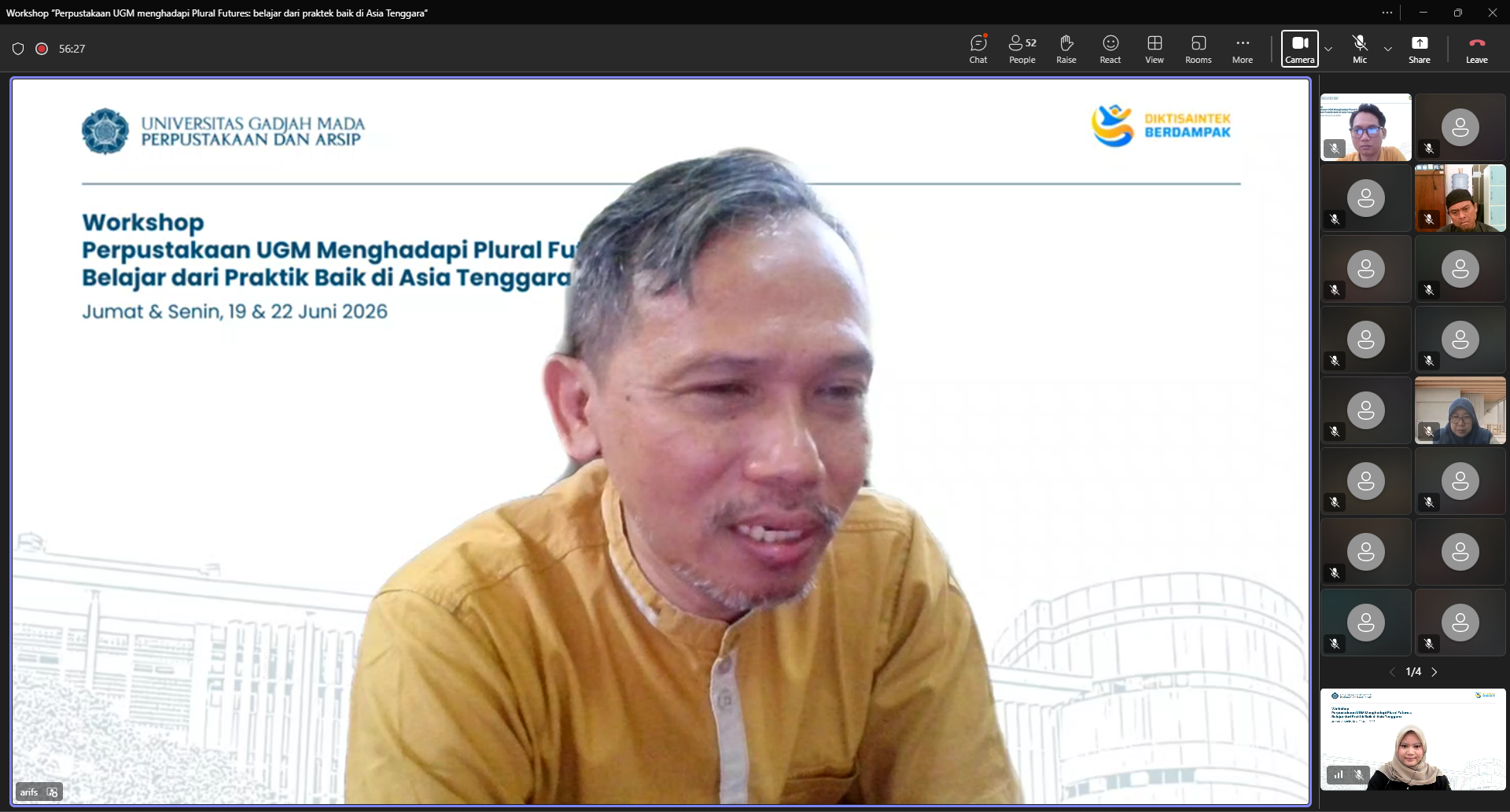 The workshop featured Arif Surachman, S.IP., MBA., Head of UGM Library and Archives, as the keynote speaker. The first session was moderated by Wasilatul Baroroh, S.S.I., while the second session was moderated by Delta Ira Anggreanie, S.IP.
During his presentation, Arif introduced the concept of plural futures, which emphasizes that there is no single model for the future of libraries. Instead, every library should evolve in line with its institutional mission, users’ needs, technological developments, and the rapidly changing higher education landscape.
“Through this workshop, we hope to encourage library development strategies that go beyond simply following trends. Instead, they should genuinely respond to the needs of UGM’s academic community. Best practices from various countries can serve as inspiration and be translated into solutions that fit our local context,” said Arif.
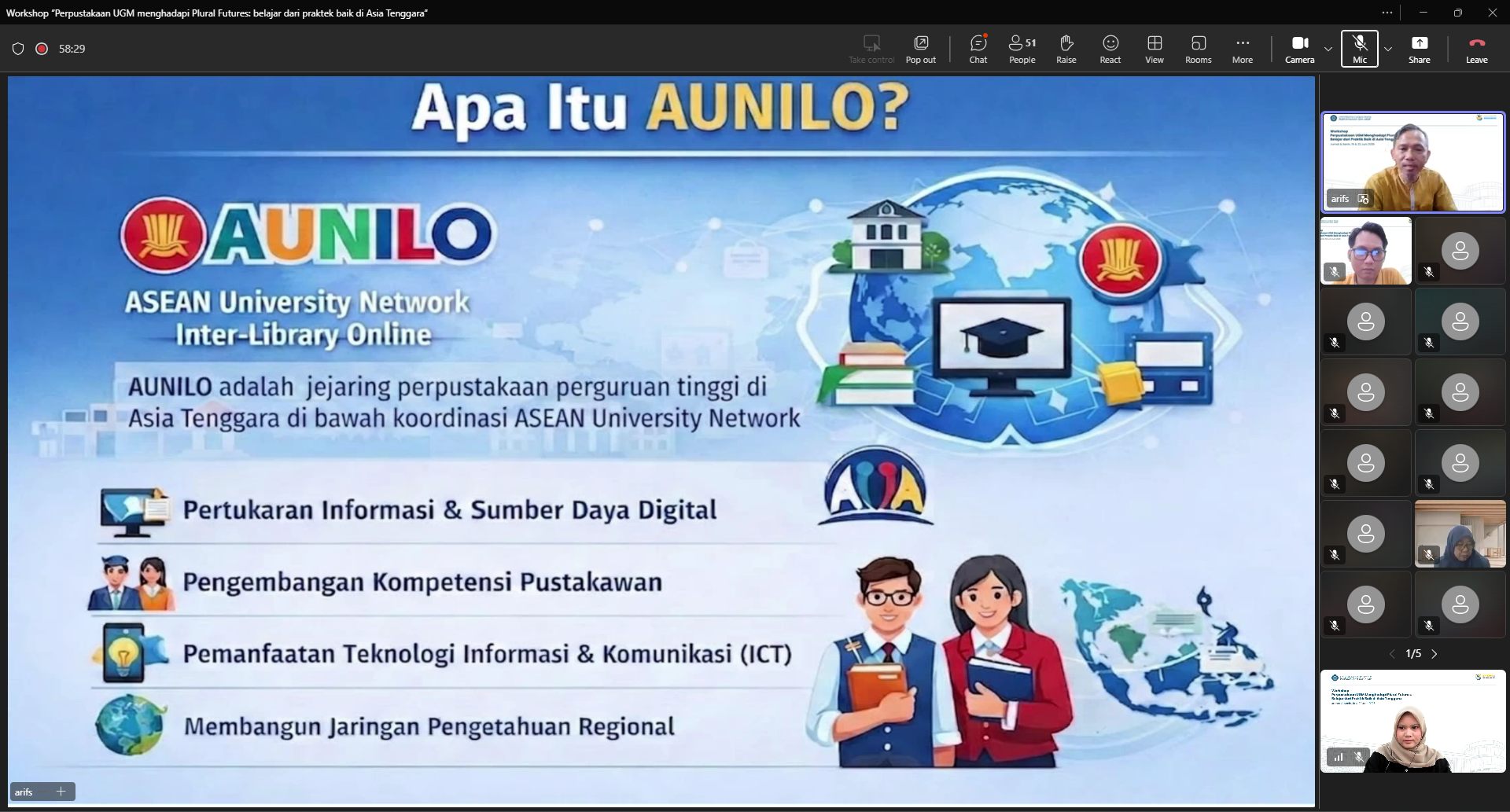 Many of the examples presented during the workshop were drawn from Arif’s participation in the ASEAN University Network Inter-Library Online (AUNILO), a collaborative network of academic libraries across Southeast Asia. Through this regional forum, he gained valuable insights into innovative library practices implemented by member institutions, which were then shared with participants as inspiration for developing services at UGM Library and Archives.
Participants learned how university libraries in Thailand have begun integrating artificial intelligence into their services through AI-powered chatbots, AI literacy training, and research support tools. Meanwhile, universities in Vietnam have developed smart digital libraries, institutional repositories, Open Educational Resources (OER), AI literacy programs, and library services that are integrated into broader university digital ecosystems.
These examples encouraged participants to recognize that future libraries are not merely repositories of information, but dynamic spaces for collaboration, innovation, and continuous knowledge creation.
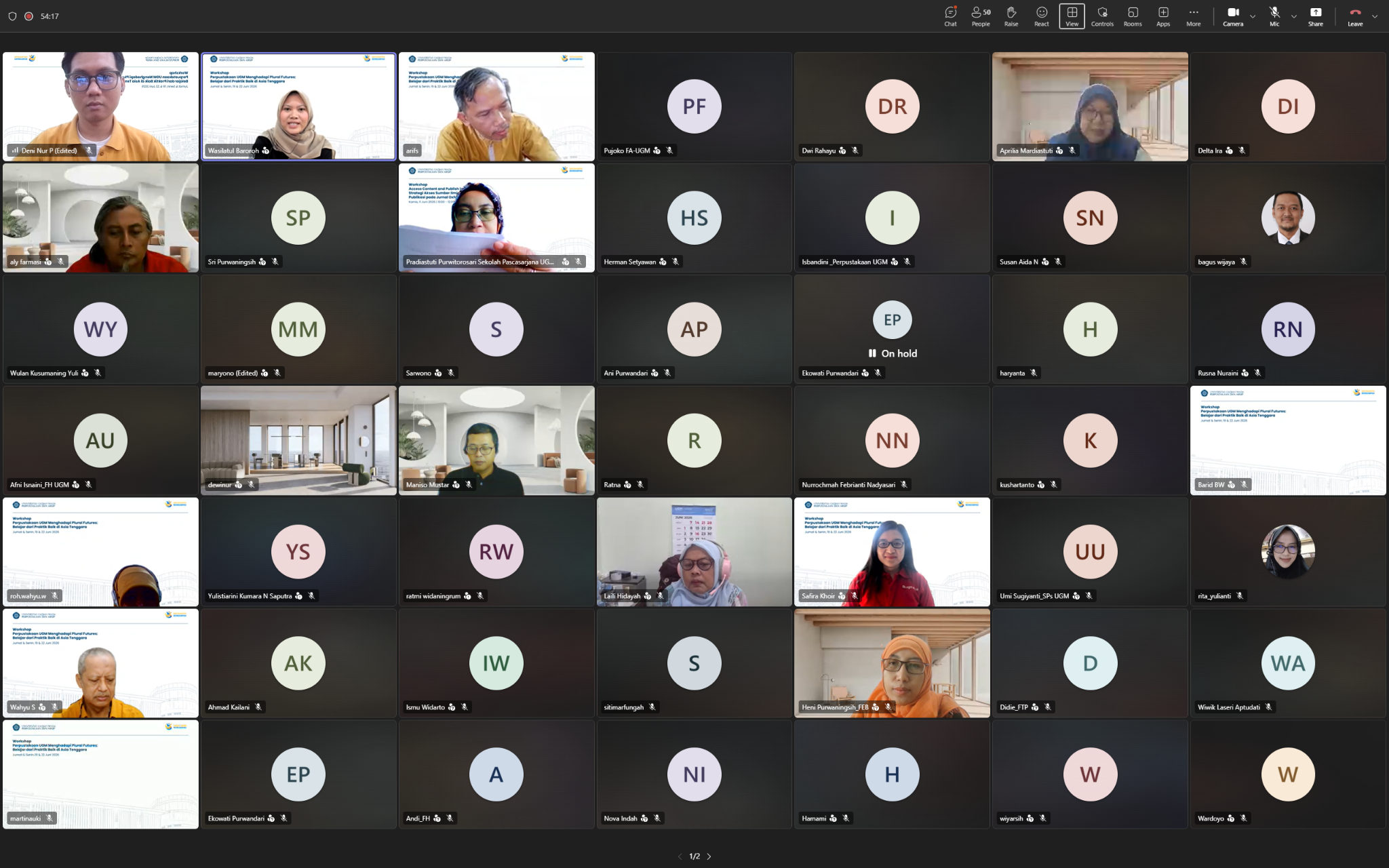
The workshop extended beyond presentations and discussions. Participants were divided into several groups to design innovative programs that could be realistically implemented at the UGM Library and Archives. Each group identified potential opportunities, selected the most promising idea, and developed it into an actionable proposal to be presented during the second workshop session.
The discussions were highly interactive as participants exchanged ideas and refined one another’s proposals. Among the initiatives discussed were optimizing the library’s co-working spaces as collaborative learning environments, strengthening information literacy programs to better support research, and developing more creative, user-centered library services.
This collaborative approach demonstrated that innovation does not always begin with large-scale transformation. Learning from other libraries’ experiences, understanding local users’ needs, and having the courage to experiment with new ideas are essential first steps toward building more relevant and future-ready library services.
 The workshop also reflects UGM Library and Archives’ commitment to supporting the Sustainable Development Goals (SDGs), particularly SDG 4 (Quality Education) by strengthening librarians’ capacity to support lifelong learning, SDG 9 (Industry, Innovation and Infrastructure) through technology-driven and innovative library services, and SDG 17 (Partnerships for the Goals) by promoting knowledge exchange and the sharing of best practices among academic libraries across Southeast Asia.
Amid the rapid pace of technological change, one thing is becoming increasingly clear: the future of libraries will not be defined by the size of their collections, but by their ability to learn continuously, embrace innovation, and provide services that truly meet the evolving needs of their users. At UGM Library and Archives, that journey toward the future has already begun.
Contributor: Wasilatul Baroroh