
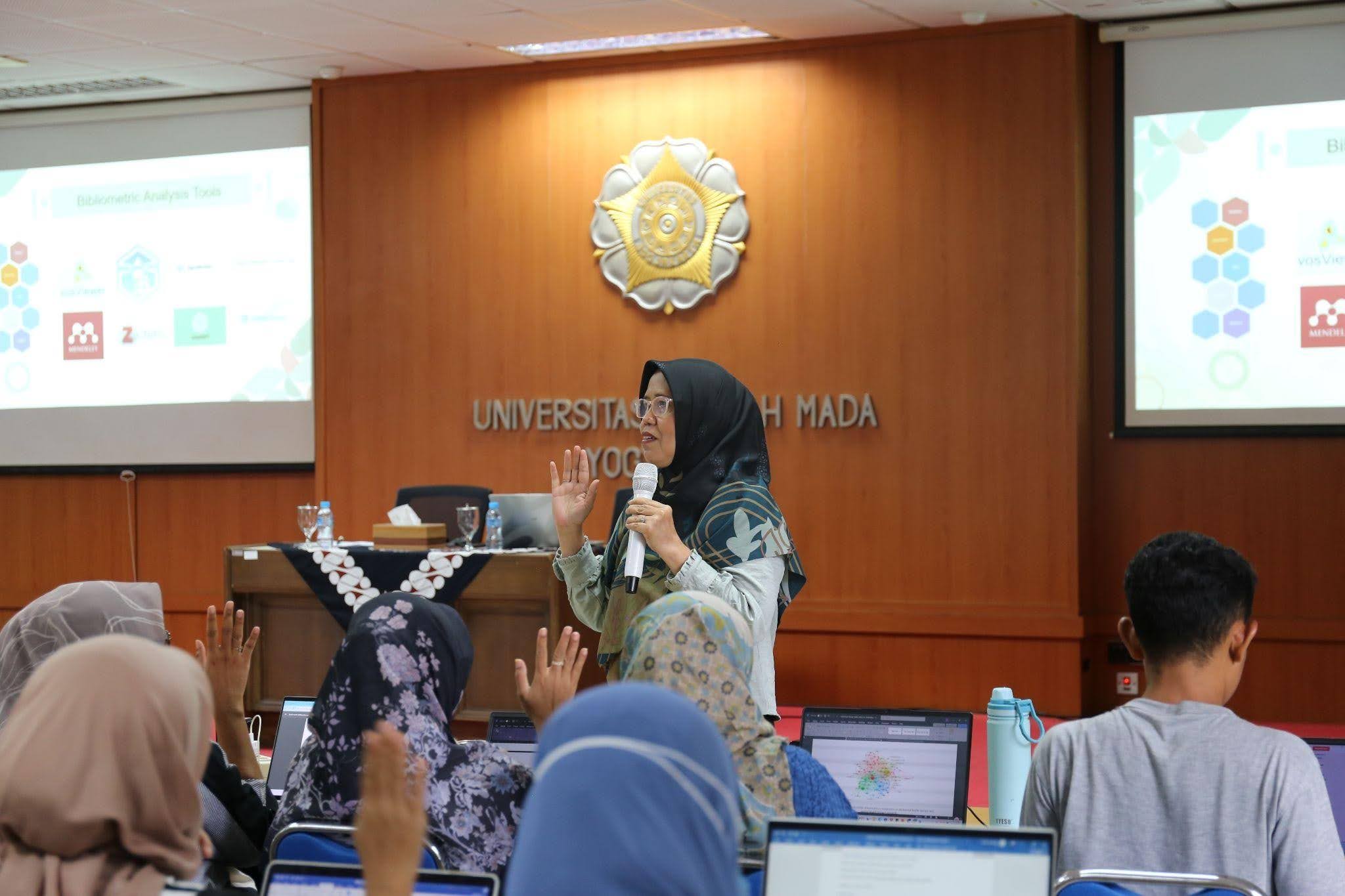
 Universitas Gadjah Mada Library and Archives organized a workshop titled Literature Review: Bibliometric Analysis Method on Thursday (April 30) at the Seminar Room, 2nd Floor, L1 Building. The event aimed to enhance the ability of the academic community to develop more systematic, structured, and data-driven literature reviews.
The workshop featured Dr. Purwani Istiana, Librarian of the Faculty of Geography UGM, as the main speaker. In her presentation, she emphasized that bibliometric analysis has become an essential approach in modern research, as it enables researchers to identify research trends, discover research gaps, and construct strong and relevant literature reviews.
In the initial session, participants were introduced to the fundamental concepts of bibliometric analysis, including key techniques such as performance analysis and science mapping. The speaker also explained core bibliometric methods, including co-citation, co-authorship, and bibliographic coupling, which are used to identify relationships between studies and the development of scientific fields.
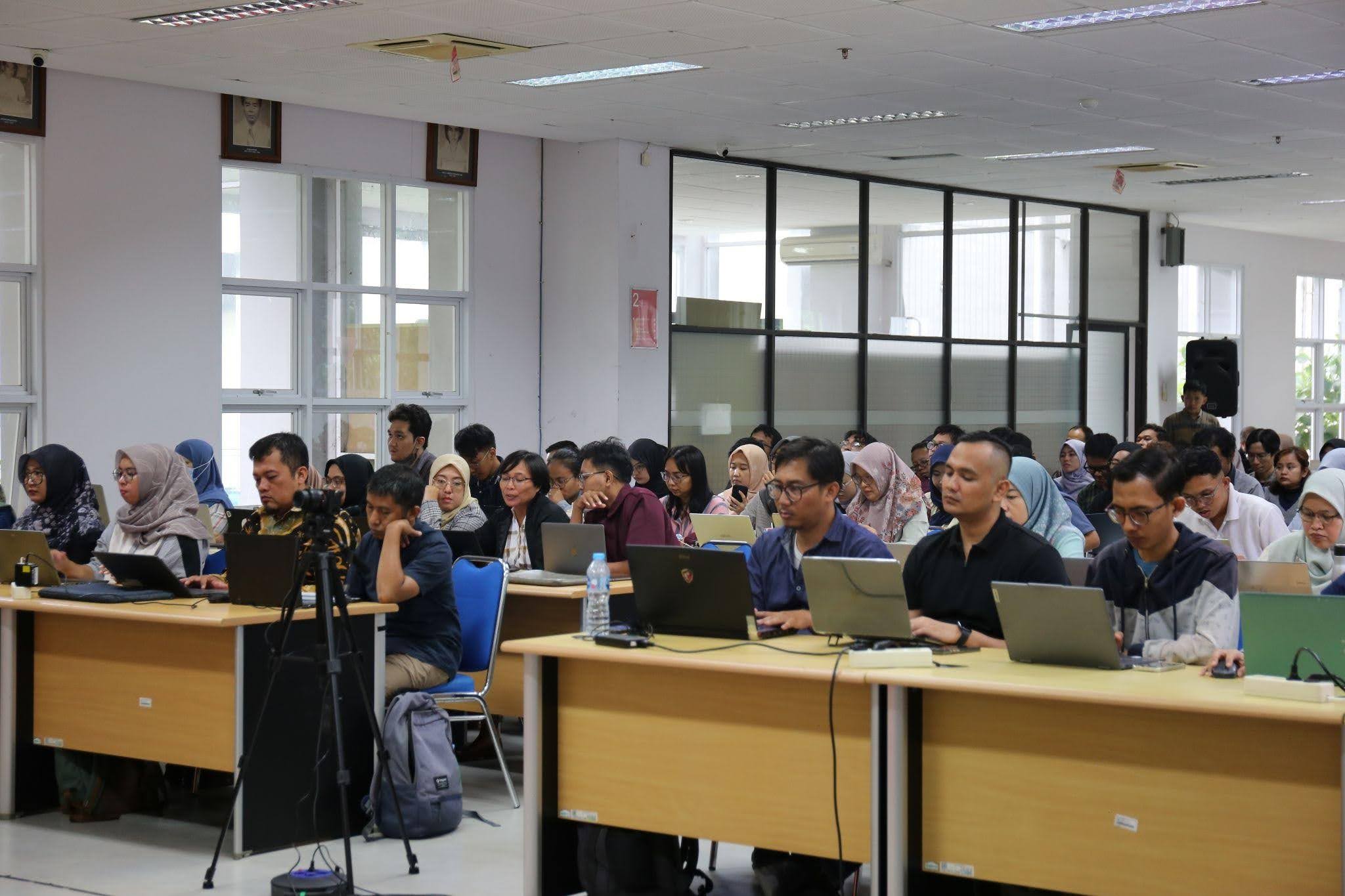 Furthermore, participants learned about the six main steps in bibliometric analysis, including data identification, screening, eligibility assessment, and final sample selection. These stages are crucial in ensuring the quality and relevance of research datasets.
From a practical perspective, the workshop also covered the use of various supporting tools such as VOSviewer for data visualization, as well as Mendeley, Zotero, and Biblioplot for reference management and bibliometric analysis. Participants gained insights into data retrieval using Scopus, dataset cleaning techniques, co-occurrence analysis, and the interpretation of visualization results to understand research patterns and trends.
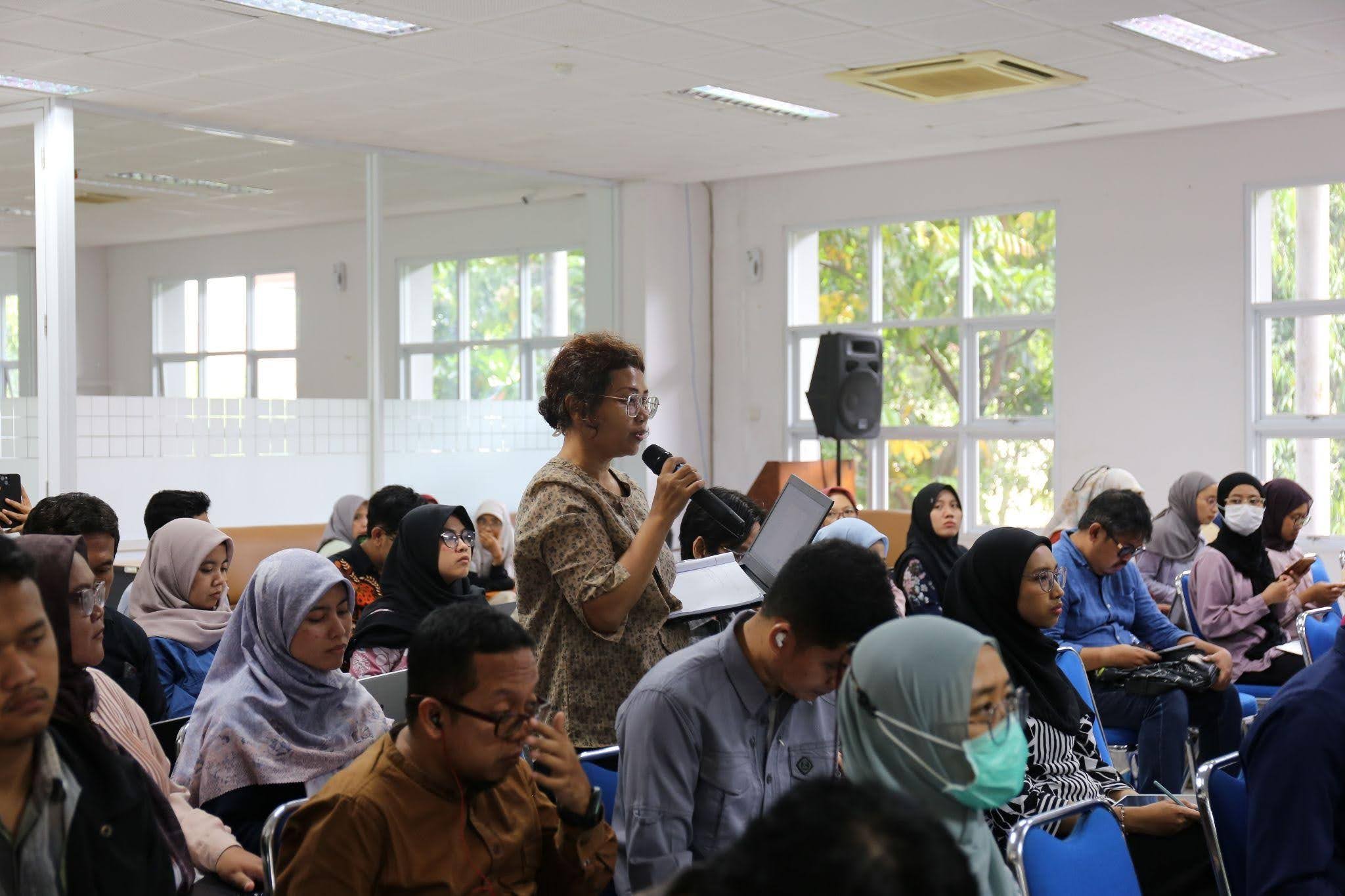 The participants showed strong enthusiasm throughout the session, particularly in exploring how bibliometric analysis can be directly applied to produce more comprehensive and evidence-based literature reviews.
This activity reflects the commitment of the UGM Library and Archives in strengthening the research capacity of the academic community, especially in adopting data-driven analytical methods aligned with technological advancements.
The event also aligns with the Sustainable Development Goals (SDGs), particularly SDG 4: Quality Education through enhancing academic competence and research literacy, and SDG 9: Industry, Innovation, and Infrastructure through the utilization of technology and data in research development.
Contributor: Denisya Ayunda Putri