
Artificial Intelligence (AI) is becoming increasingly integrated into the research process, from finding references and summarizing scholarly articles to assisting with drafting manuscripts. However, its use requires clear boundaries. While AI can help researchers work more efficiently, it should never replace their analysis, critical thinking, or academic responsibility.
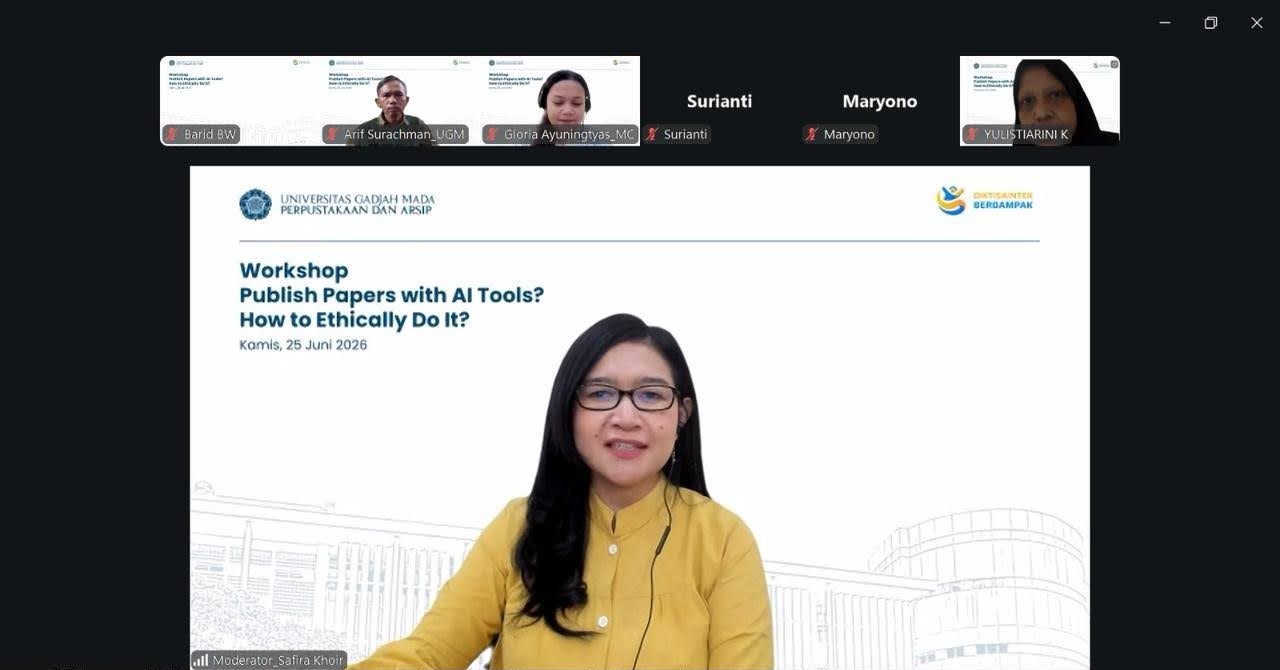 The ethical use of AI in research was the central theme of the workshop “Publish Papers with AI Tools? How to Ethically Do It?”, organized online by the Universitas Gadjah Mada (UGM) Library and Archives on Thursday (June 25).
Opening the event, Head of the UGM Library and Archives, Arif Surachman, S.IP., MBA., emphasized that access to credible scholarly resources is a fundamental element of producing high-quality research. He explained that EBSCO has long been part of UGM’s electronic information services and continues to develop features that support research activities, including AI-powered tools.
“EBSCO has evolved into a platform that supports various aspects of the research process. AI Tools offer researchers opportunities to work more efficiently, but it is equally important to understand how to use them ethically so that the quality and integrity of research are maintained,” said Arif.
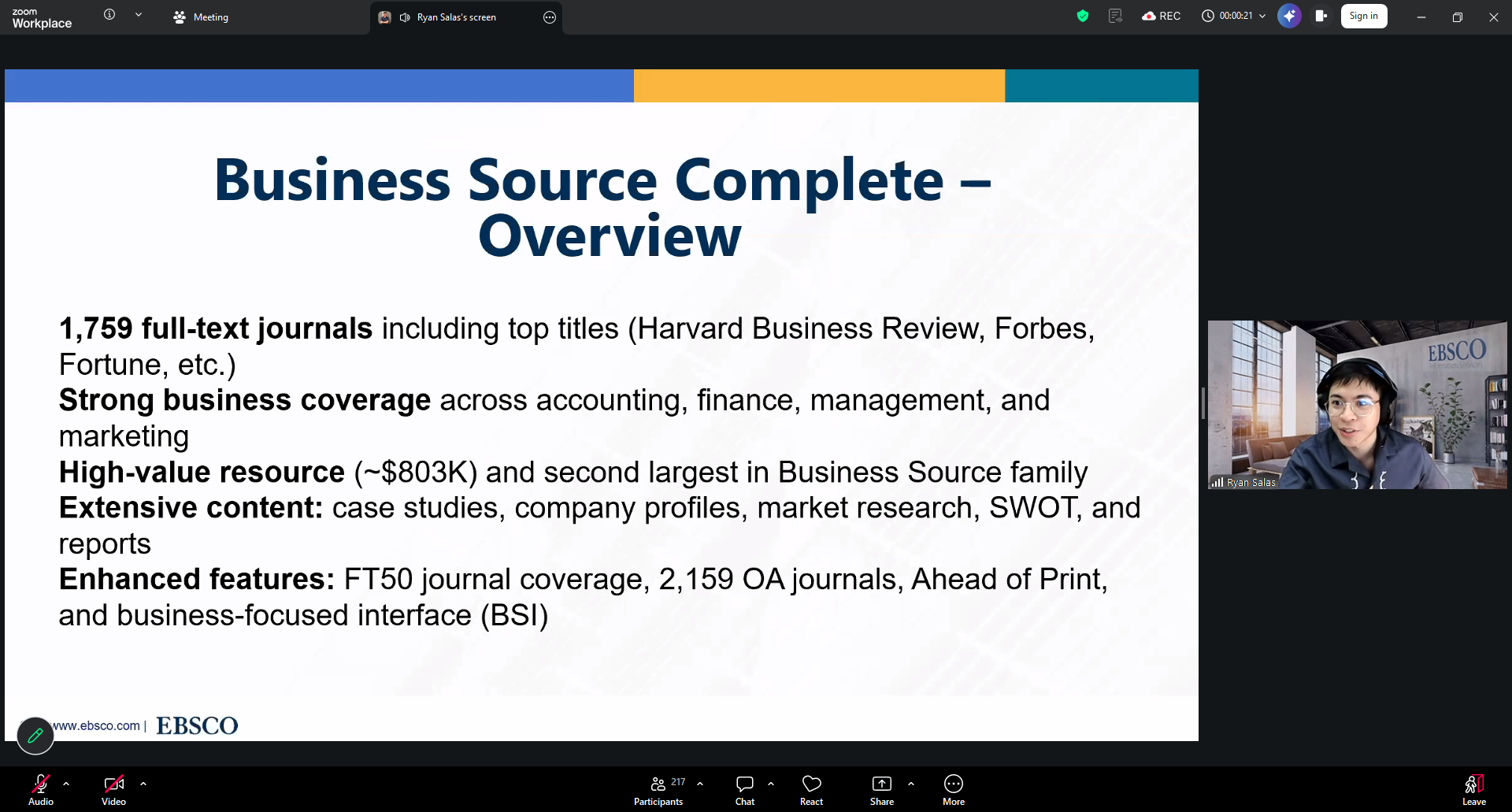 Moderated by Safirotu Khoir, Ph.D., the workshop featured Ryan Salas, Training Specialist for Southeast Asia at EBSCO, who introduced the latest features available on the EBSCO platform to support literature searching and management. During the demonstration session, Ryan showed participants how to make more effective use of Academic Search Complete (ASC) and Business Source Complete (BSC) through various search techniques, including limiters, special limiters, field codes, and natural language search, which allows users to search using everyday language.
Participants were also introduced to several AI-powered features available in EBSCO. One of them, AI Insights, helps users quickly identify the key points of scholarly articles through concise summaries. Ryan emphasized that these features are designed to facilitate literature exploration and improve understanding of research articles, while analysis, interpretation, and academic decision-making remain the responsibility of researchers.
The discussion session was highly interactive, with participants raising questions about the differences between EBSCO’s AI features and other popular AI platforms, the potential for filter bubbles in information retrieval, and the use of collaboration tools and MyEBSCO account management. Participants also received guidance on accessing EBSCO databases through the UGM network and EZproxy.
As AI continues to transform the way people search for and process information, the UGM Library and Archives remains committed to helping the academic community adapt to these changes. Its initiatives include providing access to high-quality scholarly resources and offering training on the ethical use of AI in research. Through these efforts, technology can effectively support research while maintaining academic quality, integrity, and ethical standards.
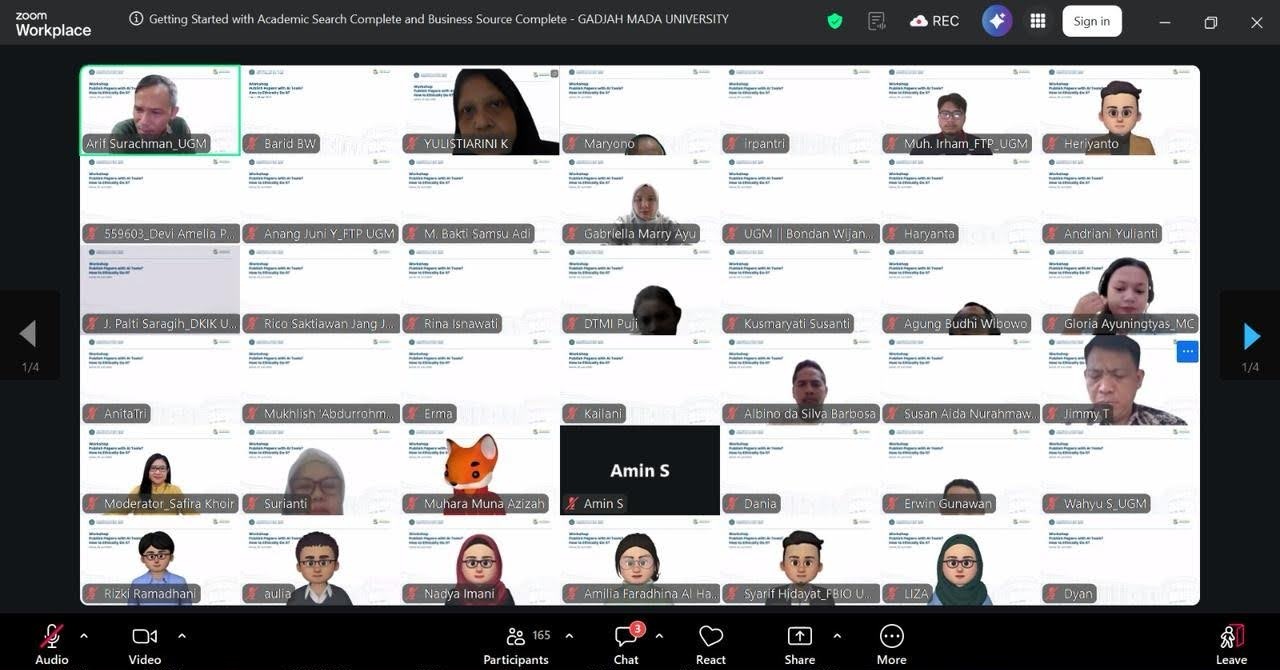 Through this workshop, the UGM Library and Archives encourages researchers to make effective use of technology while maintaining the quality, originality, and credibility of their scholarly work. This initiative supports the Sustainable Development Goals (SDGs), particularly SDG 4 (Quality Education) by strengthening digital literacy and SDG 9 (Industry, Innovation and Infrastructure) by promoting innovation to strengthen the research ecosystem.
Ultimately, AI can help researchers find answers more efficiently. However, curiosity, critical thinking, and academic integrity remain qualities that no machine can replace.
Contributor: Wasilatul Baroroh