
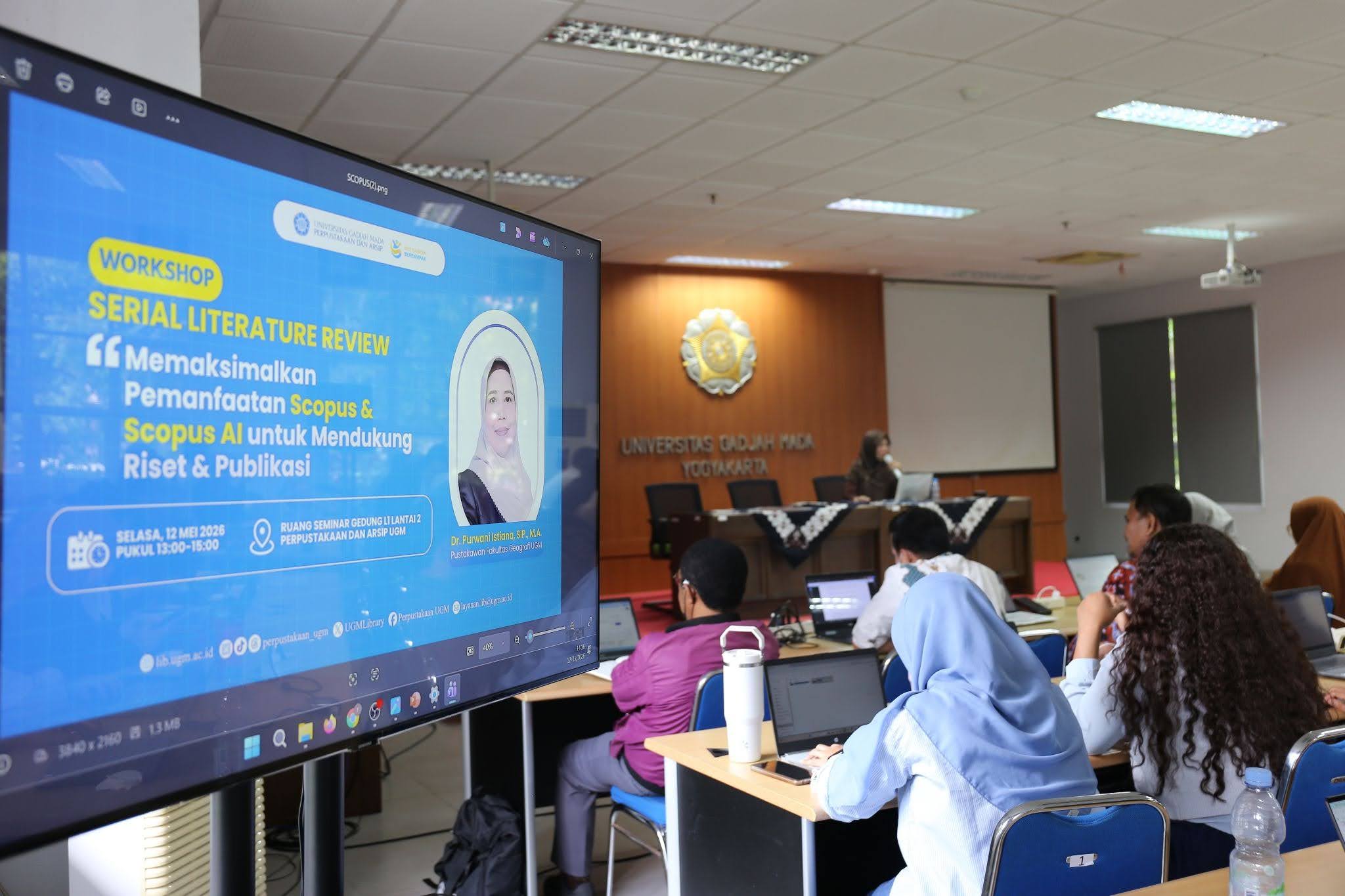
 Amid increasingly competitive demands for scientific publication, the ability to conduct precise literature searches has become an essential asset for researchers. To address this need, the Library and Archives of Universitas Gadjah Mada organized a Workshop Series on Literature Review titled “Maximizing the Utilization of Scopus & Scopus AI to Support Research & Publication” on Tuesday (12/5) at the Seminar Room, 2nd Floor, L1 Building, UGM Library and Archives.
The workshop featured Dr. Purwani Istiana, SIP., M.A., Librarian at the Faculty of Geography UGM, as the main speaker. The session discussed strategies for using Scopus and Scopus AI for literature searching, research trend analysis, and to support more effective and targeted scientific publication processes. The event was moderated by Dewi Nurhastuti, S.Sos., who guided the discussion between the speaker and participants.
In his opening remarks, Head of UGM Library and Archives, Arif Surachman, SIP., MBA., emphasized that UGM has subscribed to Scopus and various other scientific databases to support the research needs of the university’s academic community. Therefore, he encouraged the UGM academic community to maximize the use of these facilities.
“UGM has provided access to Scopus and various other scientific databases. These facilities need to be utilized optimally by the academic community to support research, scientific writing, and higher-quality publications,” said Arif.
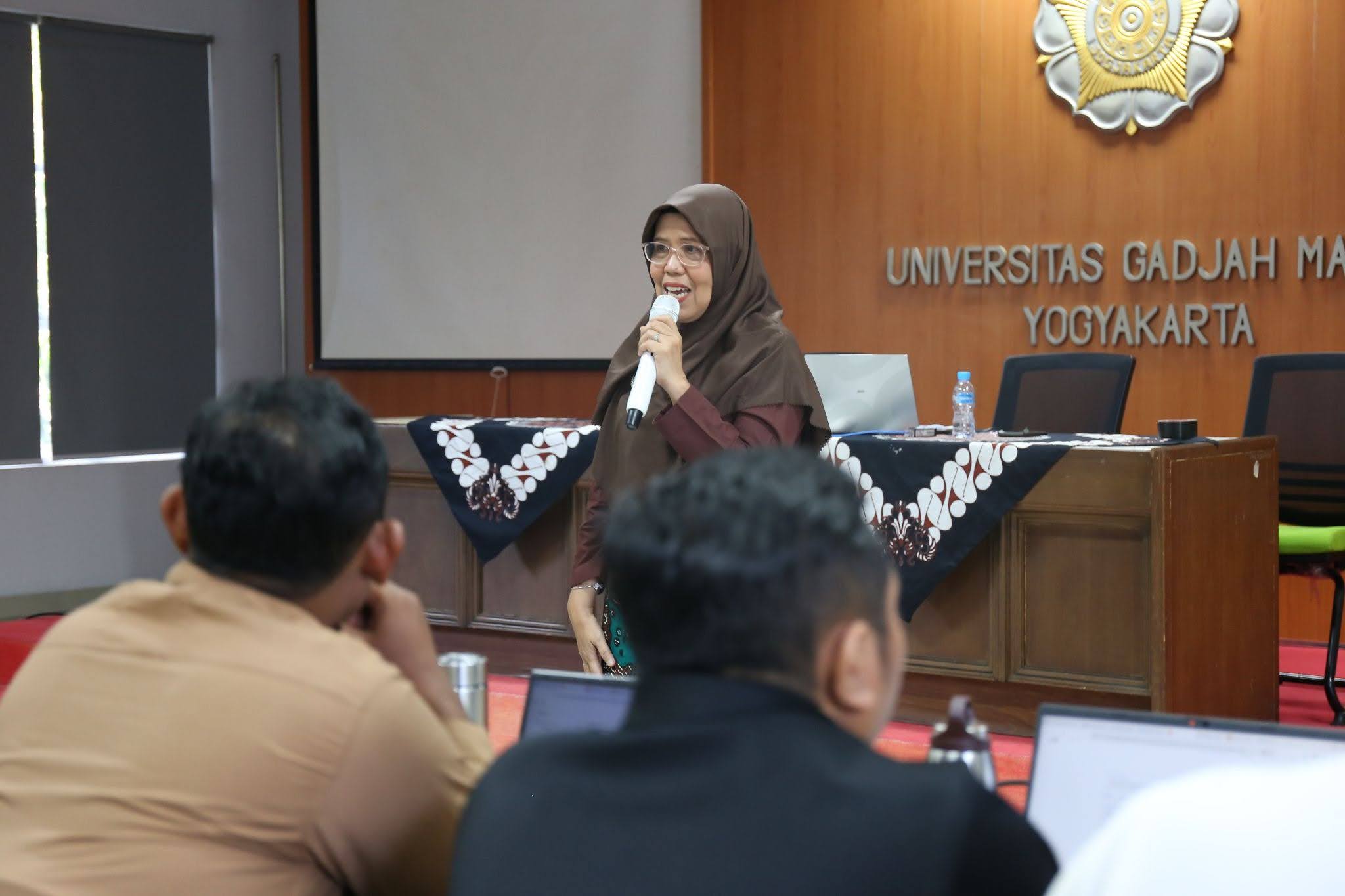 During her presentation, Dr. Purwani Istiana explained the use of Scopus as a scientific database for literature searching, citation analysis, research trend mapping, and identifying relevant journals for publication. She also introduced Scopus AI as a supporting feature that can help researchers understand research topics more quickly through AI-generated summaries, research relationship mapping, and trend and research gap identification.
“Researchers today are no longer simply required to search for articles. They also need to understand research developments, identify trends, recognize opportunities for novelty, and determine appropriate publication strategies. Through Scopus and Scopus AI, these processes can be carried out more effectively and systematically,” she explained.
Workshop participants were also invited to practice directly using various Scopus and Scopus AI features, ranging from scientific article search techniques, citation analysis, and author profile exploration, to the use of AI to develop more systematic literature reviews. The discussion session was highly interactive, with participants raising questions related to reference searching strategies and challenges in scientific publication.
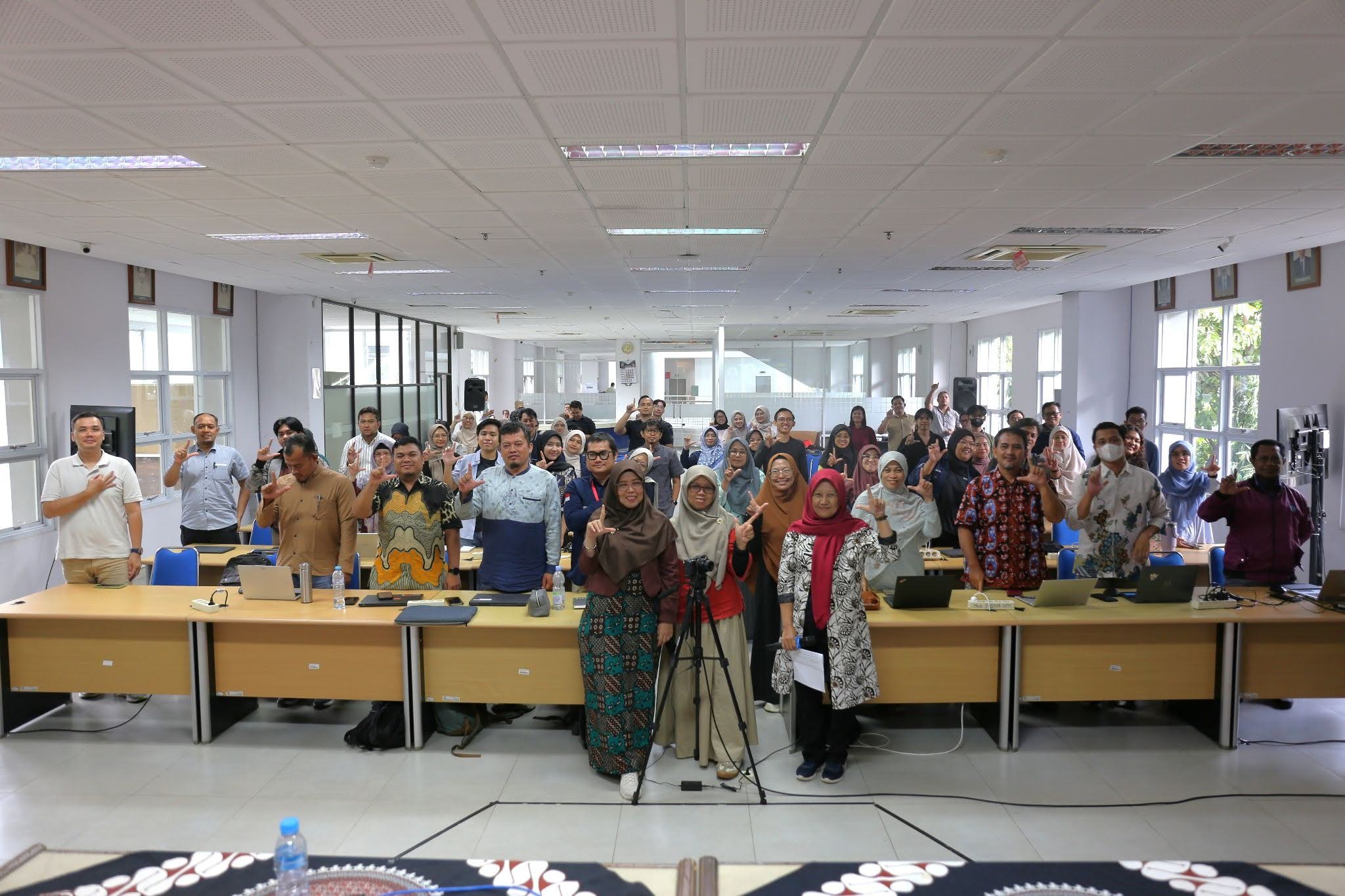 This activity also supports the Sustainable Development Goals (SDGs), particularly SDG 4 on Quality Education through strengthening research competencies and information literacy, and SDG 9 on Industry, Innovation, and Infrastructure through the use of digital technology and artificial intelligence to support scientific development.
Through this workshop, the UGM Library and Archives reaffirmed its commitment to continuously supporting the strengthening of the academic community’s research capacity amid the rapid development of digital technology. Beyond providing access to scientific information, the library also serves as a learning space and academic support center, enabling researchers to use technology critically, adaptively, and responsibly to produce high-quality research and publications.
Contributor: Wasilatul Baroroh