
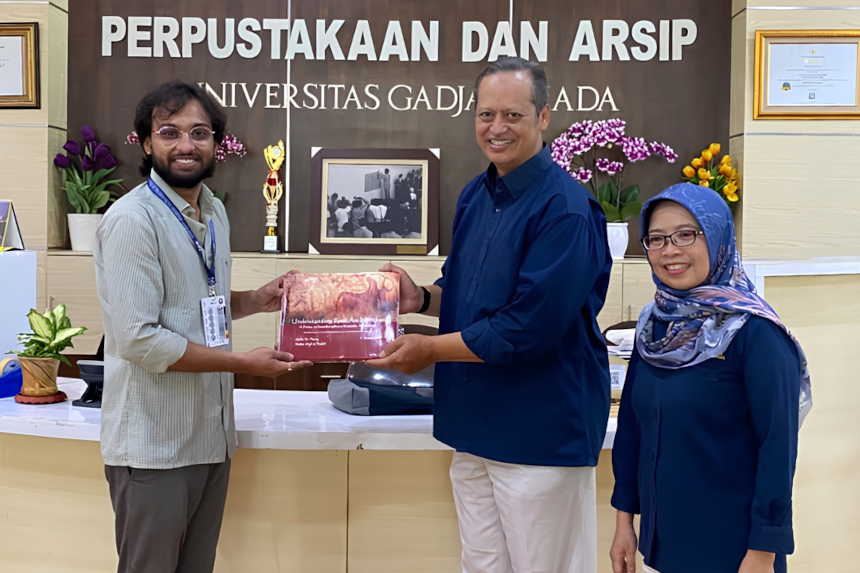
 Two international books donated by the University of the Philippines Diliman and Banaras Hindu University, India, have enriched the collections of Universitas Gadjah Mada (UGM) Library and Archives. Received on November 3–4, 2026, the books offer valuable references on language documentation, cultural identity, and scientific approaches to the study and preservation of cultural heritage.
The first donation was received on Tuesday, November 3, from the University of the Philippines Diliman. It was English–Bahasa Sūg Dictionary, authored by Dr. Benjsāhisa Bangahan. This is the first English-language dictionary of the Tausug language (Bahasa Sūg). Bahasa Sūg serves as a lingua franca, or a common language, among communities in the Sulu Archipelago, Tawi-Tawi, Basilan, and parts of Palawan in the Philippines.
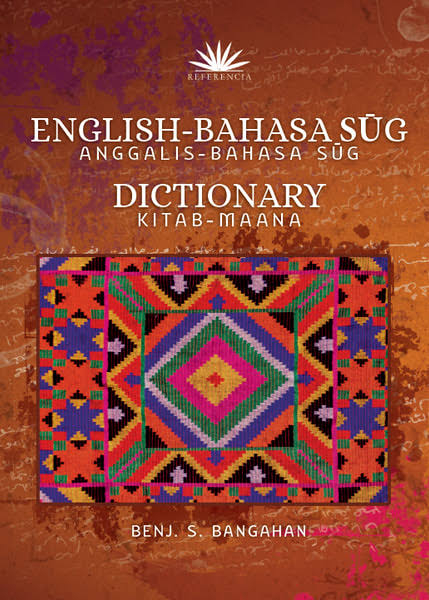 The book’s distinctive feature lies not only in its documentation of vocabulary and translations but also in its exploration of the origin of the term “Tausūg.” The author proposes an interpretation of the term as meaning “people of the path of knowledge.” This interpretation offers a different perspective from the more widely recognized anthropological interpretation of “people of the current.”
The dictionary serves as an important reference for understanding both the language and the cultural identity of the Tausug people. Documentation of Bahasa Sūg can broaden perspectives in linguistic research and the study of cultural interactions across Southeast Asia, particularly among communities in the Indonesia–Philippines border region. The collection also offers opportunities for comparative studies of language, identity, and cultural dynamics throughout the region.
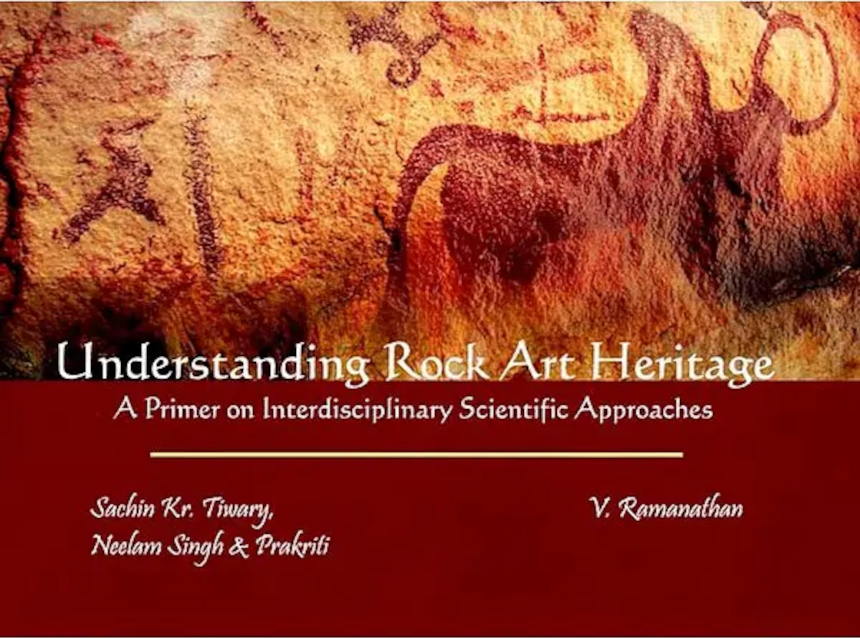 A day later, on Wednesday, November 4, UGM Library and Archives received another book donation from Banaras Hindu University, Varanasi, India. The book, titled Understanding Rock Art Heritage: A Primer on Interdisciplinary Scientific Approaches, was written by Sachin Kumar Tiwary, V. Ramanathan, Neelam Singh, and Prakriti.
The book provides an academic introduction to the study of rock art through interdisciplinary scientific approaches. Its coverage includes the fundamental concepts of rock art studies, the development of rock art research in India, and the integration of modern scientific methods with traditional approaches to interpreting cultural remains from the past.
Furthermore, the book explores the role of ethnographic approaches in understanding the meanings behind the creation of rock art. Conservation is another key focus, particularly the threats facing rock art sites due to environmental factors and climate change, along with strategies for risk mitigation and preservation. Featuring case studies and detailed documentation sheets, the book serves as a practical reference for researchers, archaeologists, and cultural heritage conservation practitioners.
The topics discussed in the book are also relevant to Indonesia’s rich prehistoric heritage. Several significant rock art sites, including the Maros-Pangkep karst region in South Sulawesi and the Sangkulirang-Mangkalihat karst region in East Kalimantan, highlight the importance of researching and preserving cultural remains from the past. The interdisciplinary approaches, documentation methods, and conservation strategies discussed in the book can serve as valuable references for broadening research perspectives and supporting efforts to protect cultural heritage sites in Indonesia.
The two donations further enrich UGM Library and Archives’ collections, particularly in the fields of linguistics, anthropology, archaeology, history, and cultural heritage preservation. The publications offer complementary perspectives. English–Bahasa Sūg Dictionary documents linguistic richness and cultural identity, while Understanding Rock Art Heritage provides scientific insights into the study and conservation of cultural remains. Together, they also create opportunities for comparative research and cross-border academic collaboration.
This initiative aligns with the Sustainable Development Goals (SDGs), particularly SDG 4 (Quality Education) through the provision of diverse learning resources and academic references; SDG 11 (Sustainable Cities and Communities), particularly efforts to protect and safeguard the world’s cultural heritage; and SDG 17 (Partnerships for the Goals) through strengthened cooperation among higher education institutions across countries in facilitating knowledge exchange and expanding access to academic resources.
Contributor: Wasilatul Baroroh