
In the midst of the rampant presence of predatory and fraudulent journals lurking within the academic realm, accurately selecting a scientific publication venue has emerged as a significant challenge to a researcher’s reputation. To mitigate these risks, the Library and Archives of Universitas Gadjah Mada (UGM) hosted a workshop on navigating scientific publications, aimed at guiding the academic community to submit their research to credible and targeted outlets.
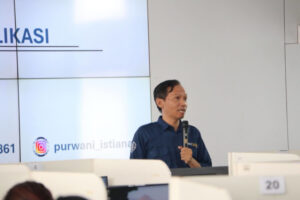 The event commenced with opening remarks from the Head of UGM Library and Archives, Arif Surachman, S.I.P., M.B.A. In his address, he emphasized the vital importance of rigorous journal selection to ensure research yields optimal impact, while highlighting the library’s role in facilitating UGM’s academic community through strategic training initiatives.
The main session was moderated by Sarwono, S.I.P., M.A., a Librarian at UGM Library and Archives. This was followed by a comprehensive presentation delivered by Dr. Purwani Istiana, M.A., an Associate Librarian from the Faculty of Geography at UGM and a member of UGM’s SINTA verification team.
Drawing upon the 2019 publication guidelines, Dr. Purwani categorized journals into four primary tiers: national journals, accredited national journals, international journals, and reputable international journals.
Furthermore, she provided self-curation guidelines for evaluating the governance quality of a journal. She advised researchers to verify the authenticity of journal titles via the Garuda (Garda Rujukan Digital) portal and to carefully assess the institutional diversity of both authors and editorial boards. If authors or editors belong exclusively to a single institution, the journal should ideally be avoided, as a reputable journal requires representation from at least two distinct institutions.
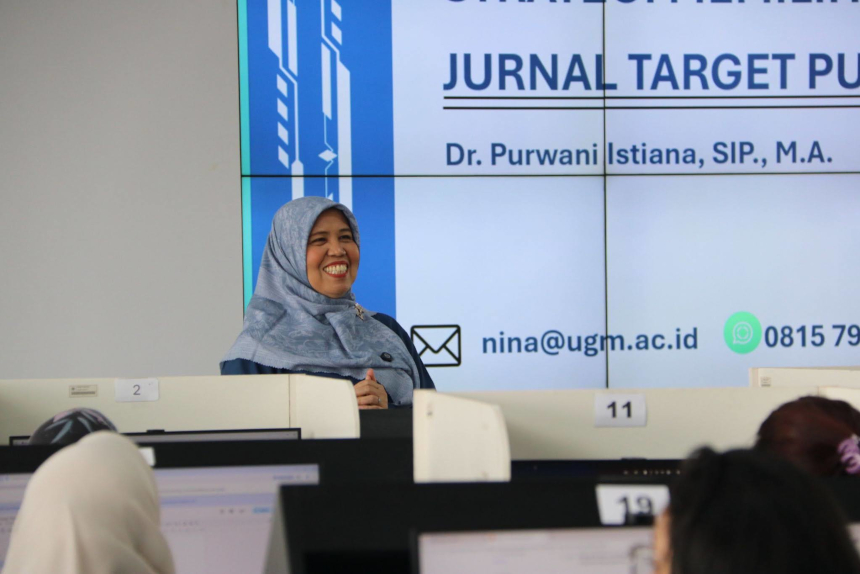 Dr. Purwani also underscored three fundamental reasons for publishing scientific work: advancing scientific knowledge, enhancing research visibility, and driving academic impact and citation rates. Researchers were further advised to ensure strict alignment between their manuscripts and the journal’s scope to prevent outright rejection.
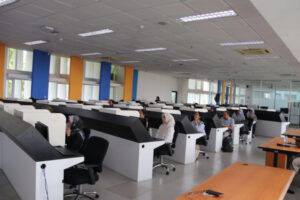 Throughout the session, participant engagement was reflected in an interactive discussion surrounding common technical hurdles faced during manuscript submission and post-rejection scenarios. UGM Library and Archives reaffirmed its commitment to providing ongoing consultation and information literacy assistance for researchers and students striving to publish in reputable national and international venues.
This initiative aligns seamlessly with the achievement of Sustainable Development Goal (SDG) 4: Quality Education, through the enhancement of literacy capacity and academic research standards, as well as SDG 9: Industry, Innovation, and Infrastructure, by strengthening a trusted ecosystem for scientific research and innovation.
At the conclusion of her presentation, Dr. Purwani offered a compelling call to action:
“At the very least, we should aim to have one of our articles published in a reputable journal. Among the more than 30,000 national and accredited national journals, is there really no place for our work? Or out of the vast number of reputable international journals, can we truly not secure a single publication?” she expressed.
Scientific publication is far more than a mere administrative requirement; it represents an intellectual legacy in service to civilization. Has your research found its rightful home?
Contributor: Mukhammad Ramadhani Abdul Kafy