
Finding credible scholarly journal references often becomes a challenge for students and researchers. Amid the overwhelming flow of digital information, the ability to locate reliable academic sources has become an essential skill in the academic process. Responding to this need, the Library and Archives of Universitas Gadjah Mada organized a SAGE Database Literacy Class to help participants understand effective strategies for finding internationally reputable scholarly references.
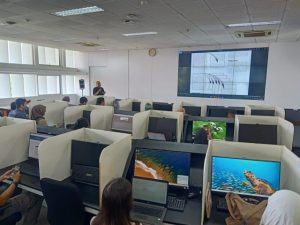
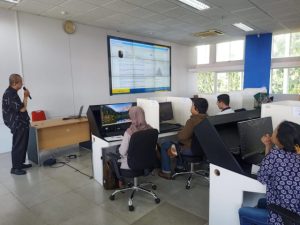 The activity was held on Tuesday (March 10, 2026) at the Computer Laboratory, L1 Building, 5th Floor, Library and Archives UGM. The literacy class featured librarian Maryono, SIP as the speaker, who shared various techniques for searching scholarly articles through the database of SAGE Publications.
During the training session, participants were guided to understand how to access the database, conduct systematic article searches, and select relevant and high-quality scholarly publications to support coursework and research.
Maryono emphasized that information literacy has become a key skill in the digital era, which is filled with diverse sources of information. “Students not only need to find information, but they must also be able to assess its credibility. Databases such as SAGE provide reputable journals that can serve as reliable academic references,” he explained.
He added that the training also allowed participants to directly practice search strategies using keywords, topic filters, and methods for downloading and utilizing scholarly articles effectively for academic purposes.
 According to him, the ability to explore scientific literature effectively can improve research quality while strengthening a data-driven academic culture. “When students are able to utilize international databases properly, they are not only completing their coursework but also building a stronger research foundation,” Maryono added.
This database literacy class is part of the commitment of the UGM Library and Archives to enhance the information literacy competencies of the academic community. The initiative also aligns with efforts to support the achievement of Sustainable Development Goal 4: Quality Education, which emphasizes the importance of access to quality education and reliable sources of knowledge.
Amid the rapid growth of global scientific publications, the ability to select and utilize credible academic references has become an essential asset for the next generation of researchers. Literacy classes like this serve as a reminder that behind every high-quality research work lies a careful and well-directed process of information searching.
Contributor: Wasilatul Baroroh